
How to Brush Your Dog's Teeth: A Step-by-Step Guide
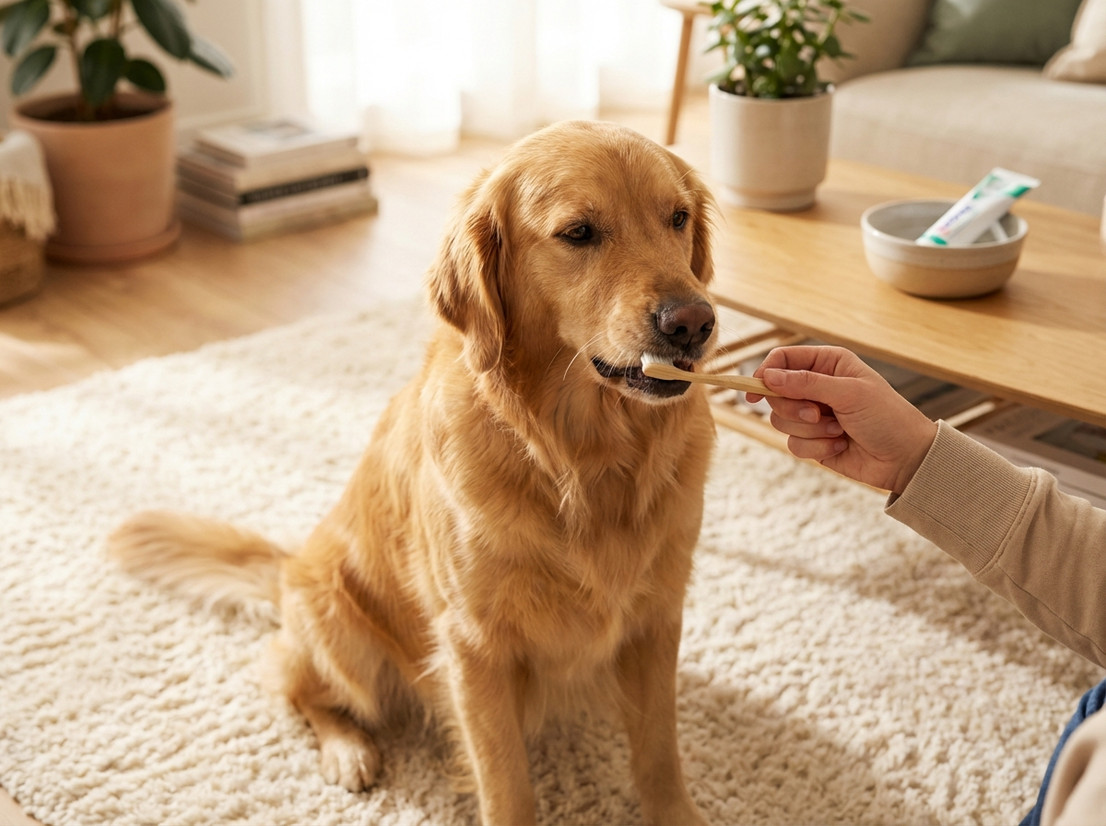
Learning to brush your dog's teeth properly is one of the simplest ways to protect their long-term health. Poor dental hygiene in dogs can lead to painful infections, tooth loss, and even organ damage — yet most owners skip this essential routine. The good news? With the right technique and a little patience, tooth brushing can become a stress-free part of your dog's weekly care.
Why Dental Hygiene Matters for Dogs
By the age of three, the majority of dogs already show signs of dental disease. Plaque builds up on the teeth within hours of eating, and without regular removal it hardens into tarite — a stubite, bacteria-laden deposit that sits along the gumline.
Left unchecked, this bacterial build-up doesn't stay in the mouth. It can enter the bloodstream and affect the heart, kidneys, and liver. Maintaining good dog dental hygiene is therefore about far more than fresh breath; it's a cornerstone of preventive health care.
Dental problems also cause significant pain that dogs instinctively hide. Regular brushing helps you spot early warning signs — red gums, loose teeth, or unusual lumps — before they become serious.
What You Need Before You Start
Gather your supplies so the process is smooth and uninterrupted. You'll need:
- A dog-specific toothbrush — finger brushes work well for beginners, while long-handled brushes suit larger breeds.
- Dog-safe toothpaste — never use human toothpaste, as ingredients like xylitol and fluoride are toxic to dogs.
- High-value treats — small, soft rewards to build positive associations.
You can find toothbrushes, enzymatic toothpastes, and dental chews in our dog product range. Having everything within arm's reach means you won't need to leave your dog mid-session to hunt for supplies.
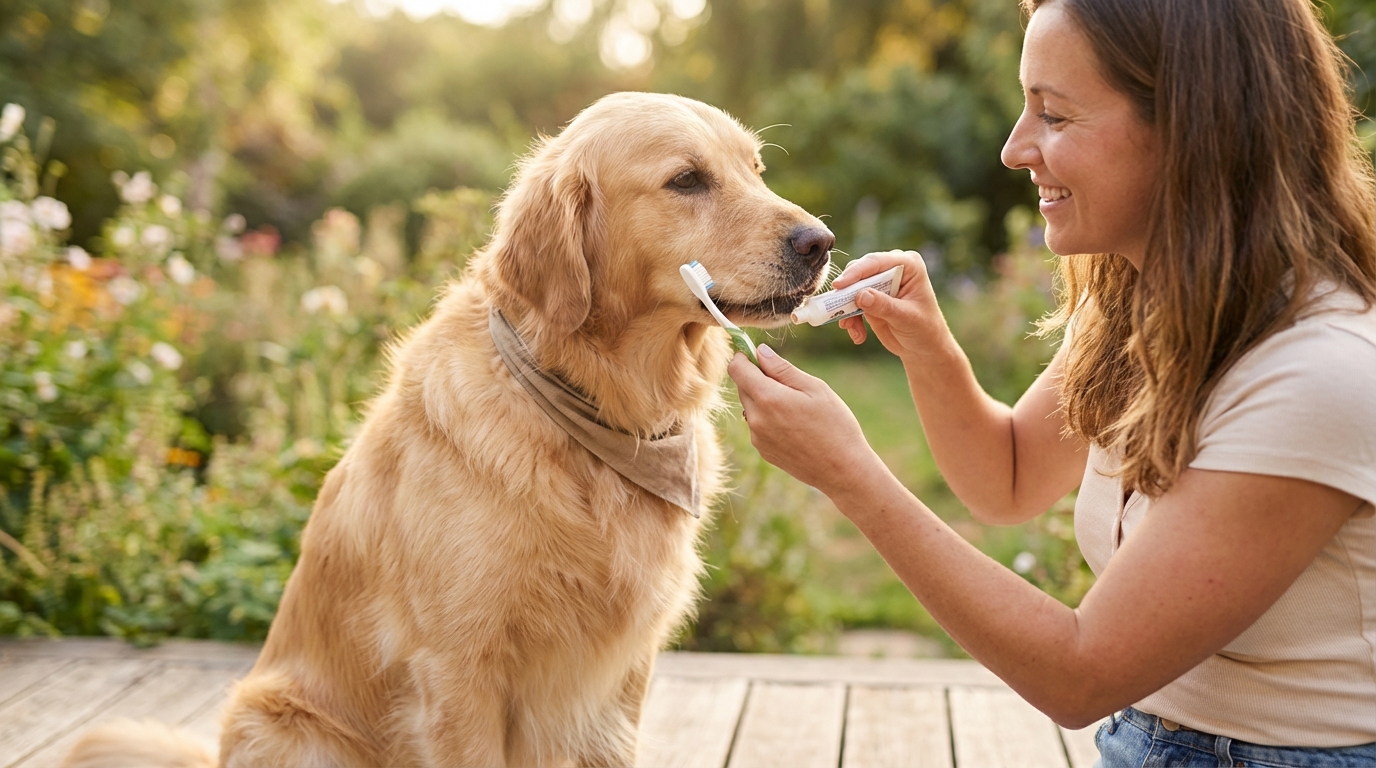
Step-by-Step: Brushing Your Dog's Teeth
1. Choose a calm moment. Pick a time when your dog is relaxed — after a walk or play session is ideal. Avoid brushing when they're excited, anxious, or hungry.
2. Let them taste the toothpaste. Squeeze a pea-sized amount onto your finger and let your dog lick it. Most dog toothpastes come in flavours like poultry or beef, so this step usually goes down well.
3. Touch the gums first. Before introducing the brush, gently lift your dog's lip and run your finger along the outer gumline. Reward them immediately. Repeat this over several short sessions until they're comfortable with mouth handling.
4. Introduce the brush. Apply toothpaste to the brush and hold it at a 45-degree angle against the teeth. Use small, circular motions along the outer surfaces — these are where plaque accumulates most. Focus on the upper back molars and canines.
5. Keep sessions short. Aim for 30–60 seconds per side to start. As your dog grows accustomed to the routine, you can gradually extend the time.
6. Finish with praise and a reward. Always end on a positive note so your dog looks forward to the next session.
Quick tip: If your dog resists the toothbrush, wrap a small piece of damp gauze around your finger and use that instead. It's gentler on sensitive gums and gives you more control while your dog adjusts.
How Often Should You Brush?
Daily brushing is the gold standard for keeping your dog's teeth clean and their gums healthy. Plaque can mineralise into tartar in as little as 48–72 hours, so consistency matters more than duration.
If daily brushing isn't realistic, aim for at least three to four sessions per week. Even this frequency significantly reduces plaque accumulation compared to no brushing at all.
Between brushings, dental chews and water additives can help slow plaque formation. Browse our full shop for dogs to find dental care products that complement your brushing routine.
Common Mistakes to Avoid
Rushing the introduction. Forcing a toothbrush into an unwilling dog's mouth creates lasting negative associations. Take a week or more to build up gradually — patience now saves frustration later.
Ignoring the back teeth. Owners tend to focus on the front teeth because they're easy to reach. However, the premolars and molars at the rear of the mouth are far more prone to tartar build-up and decay.
Using human toothpaste. This cannot be overstated. Human formulations contain foaming agents and sweeteners that are harmful — and sometimes fatal — to dogs. Always use a product specifically designed for canine use.
Skipping the inner surfaces. While the outer tooth surfaces collect the most plaque, try to brush the inner (tongue-side) surfaces occasionally too, especially on the larger back teeth.
Stopping when it gets hard. Some dogs take weeks to accept tooth brushing. If progress stalls, go back a step, keep sessions very short, and increase the value of rewards. Consistency will win out.
Frequently Asked Questions
Can I brush a puppy's teeth?
Yes — in fact, starting early is the best way to build lifelong comfort with the process. Use a soft finger brush and let your puppy explore the toothpaste flavour before attempting any actual brushing. Keep sessions playful and under a minute.
What if my dog's gums bleed during brushing?
Light bleeding can indicate early gum inflammation, which often improves with regular, gentle brushing over a couple of weeks. If bleeding is heavy, persistent, or accompanied by swelling or bad odour, it's worth having the teeth assessed professionally.
Are dental chews a substitute for brushing my dog's teeth?
Dental chews are a helpful addition but not a replacement. They can reduce surface plaque, yet they don't reach all areas the way a toothbrush does. Think of them as a complement to — not a substitute for — regular brushing.
Keeping your dog's teeth clean doesn't have to be complicated. Stock up on toothbrushes, toothpastes, and dental treats in our dog shop, and if you notice any signs of advanced dental disease, have a chat with your vet for a thorough assessment.
Recent Posts
-

How to Read Pet Food Labels Like a Pro
Understanding what's printed on pet food labels is one of the simplest ways to improve your companio
-

Grain-Free Dog Food: Is It Actually Better for Your Pet?
Grain-free dog food has surged in popularity over the past decade, with many pet owners assuming it'
-

Ziwi Peak vs Raw: Is Air-Dried Worth the Price?
If you've ever compared a bag of air-dried dog food to the cost of a traditional kibble, the price t