

Wondering about the right age to start flea treatment for puppies—and how to do it safely without overdoing it? The best plan depends on your puppy’s age, current weight, health status, and the type of product you choose. Below is a practical timeline, plus home and grooming steps that help you start confidently and keep protection on track.
Why timing matters for puppies
Puppies have developing skin, immune systems, and metabolisms, so they don’t always handle parasite products the same way adult dogs do. Starting too early, using a formula not intended for young pups, or choosing the wrong strength can increase the risk of irritation or tummy upset.
Waiting too long isn’t ideal either. Fleas can trigger itching and skin inflammation, and heavier infestations can be especially draining for small puppies. Ticks can attach quickly during outdoor time and may be difficult to spot in fluffy coats.
A smart start is about matching the product to your puppy’s life stage, then following label directions exactly so you don’t leave gaps in protection.
Age and weight basics: what “safe to start” really means
If you’re trying to pin down the “best” time to begin flea and tick prevention, the most accurate answer is: check the minimum age and weight on the product label, then confirm it suits your puppy’s situation. Different actives and formats (spot-ons, chews, sprays, collars) can have different cut-offs.
Use these rules of thumb to narrow your options:
- Age matters: Many puppy-safe products are designed to begin at a specific week mark. If your pup is younger than that, stick to non-chemical control and environmental cleaning while you wait.
- Weight matters just as much: A puppy may be old enough but still too light for a particular strength. Weigh your pup regularly, especially during fast growth phases.
- Flea-only vs flea-and-tick: Some products target fleas only, while others cover both fleas and ticks. Decide based on your puppy’s exposure and what the label states.
- Species-specific only: Never use a cat product on a puppy (or vice versa). Formulations can differ dramatically.
- Health status counts: Underweight, unwell, or recently rehomed puppies may need a gentler approach while they settle—ask your vet if you’re unsure.
For everyday essentials that support a clean start (like grooming and parasite-control basics), browse our puppy supplies collection and build a simple kit you can keep handy.
Your first flea and tick protection options (by life stage)
When deciding when to start flea treatment, it helps to think in steps rather than one-and-done. Your first choice should balance safety, ease of use, and your puppy’s real-world exposure (other pets, visitors, outdoor time).
Safety first: Always follow the label and use only products intended for puppies. Never use permethrin-containing products intended for dogs around cats, as cats can be extremely sensitive to permethrin. If your puppy is very small, underweight, pregnant, unwell, or on other medicines, check with your vet before starting or combining any parasite products.
Use this simple timeline to guide your decisions (without guessing doses):
| Age/weight milestone | What to focus on | Why it helps |
|---|---|---|
| Under the label minimum age/weight | Flea combing, gentle bathing only if needed, bedding hygiene, vacuuming, and checking other pets | Reduces parasites without using products your puppy may not tolerate yet |
| Once the label minimum is met (puppy-labelled options) | Start a puppy-appropriate preventative that fits your pup’s current weight band; keep home control steps going | Begins breaking the flea life cycle and supports consistent protection |
| Ongoing (as your puppy grows) | Re-weigh regularly, adjust to the correct weight band, and keep a repeat schedule (often monthly/quarterly depending on the product) | Prevents gaps and avoids using the wrong strength as your puppy’s weight changes |
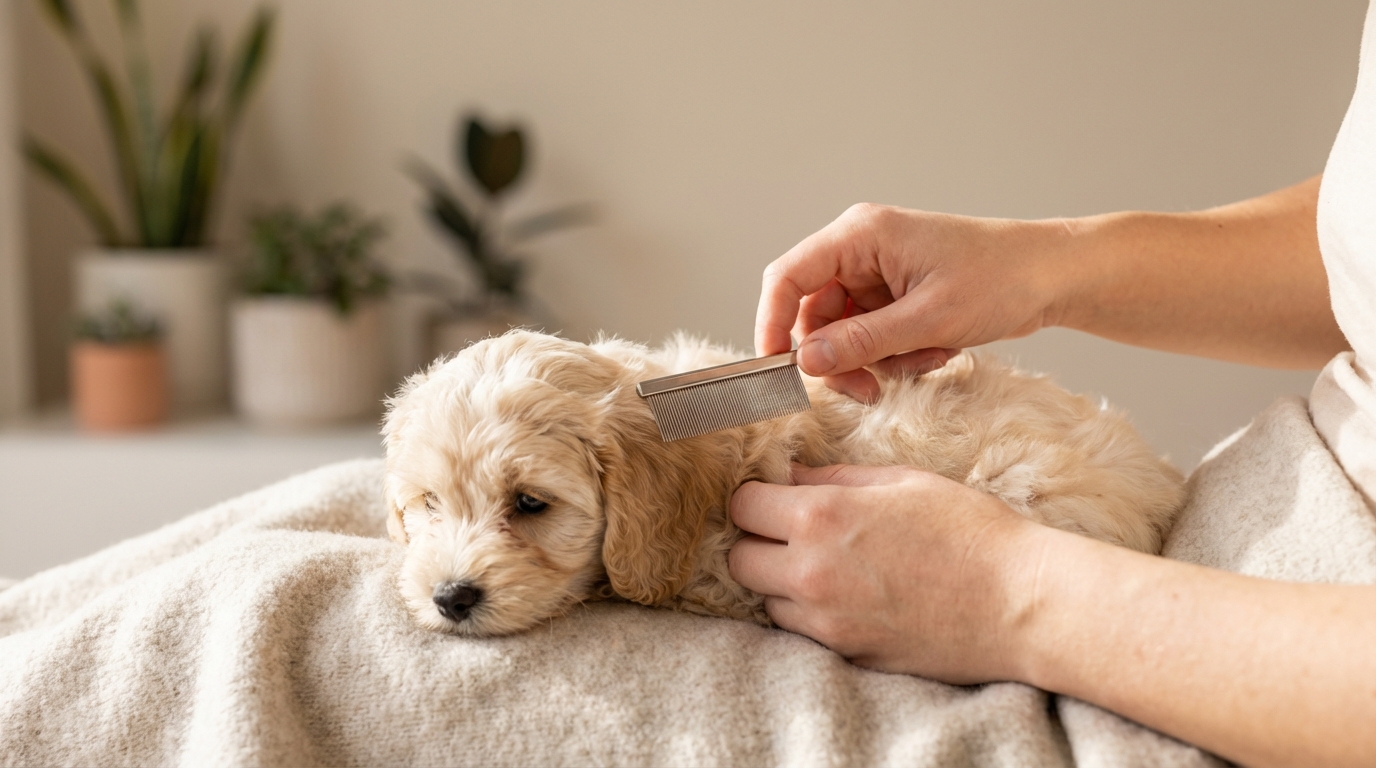
- Very young puppies: Prioritise gentle combing, regular bedding washes, and vacuuming. A fine-tooth flea comb can remove fleas before they multiply.
- Young puppies meeting label minimums: Consider puppy-labelled preventatives designed for early use. These are typically easier to apply and are sized by weight bands.
- Growing pups with more outdoor time: As exposure increases, look for broader flea-and-tick coverage (if needed) and a schedule you can stick to.
Whichever route you choose, apply or administer it exactly as directed and set a recurring reminder. Consistency is what turns a first treatment into reliable protection.
Quick tip: Start a “parasite calendar” the day you bring your puppy home: note weigh-ins, application dates, where your puppy has been (indoors, garden, visits), and any reactions. It makes choosing the right next product much easier.
Environmental control: stopping fleas where they live
Even a great product can struggle if fleas are thriving in the environment. Fleas lay eggs in bedding, carpets, rugs, upholstery, and floor cracks. Eggs hatch into larvae, then pupae, and those stages can be hard to spot—so you may see “new” fleas even after you start prevention. That’s often the life cycle catching up, not the product failing.
Practical home steps that make a real difference:
- Wash bedding and soft items regularly: Wash your puppy’s bedding, blankets, and washable covers on a hot cycle where the fabric allows, then dry thoroughly. If items can’t be washed hot, wash as warm as safe for the material and increase vacuuming around those areas.
- Vacuum frequently at the start: Vacuum carpets, rugs, sofa creases, and skirting edges several times a week during an active flea problem, then continue weekly for maintenance. Empty the vacuum contents promptly (outside your living area if possible) to reduce reinfestation.
- Target favourite resting spots: Fleas concentrate where pets sleep and where people sit. Pay special attention to corners, under furniture, and pet bedding zones.
- Treat other pets: If you have multiple pets, it’s important that all eligible animals are on an appropriate plan—otherwise fleas can bounce between them. Always use species-appropriate products and follow label guidance.
- Keep grooming consistent: Regular brushing and combing helps you spot flea dirt early (tiny dark specks) and gives you a chance to act before the problem grows.
To support these routines, you can find grooming basics, combs, and everyday essentials in our puppy supplies collection.
Tick prevention for puppies: daily checks and safe removal basics
Tick prevention for puppies combines product choice with simple habits. Even with a preventative, daily checks are worthwhile—especially after time in long grass, brush, or areas frequented by wildlife.
Make tick checks quick and calm:
- Run your fingers through the coat to feel for small bumps, not just visible ticks.
- Focus on common attachment spots: around the head, ears, neck, between toes, under legs, and around the tail base.
- Use good lighting: Part the coat and check the skin, especially on darker-coated puppies.
If you find a tick, remove it promptly and carefully. A purpose-made tick removal tool is designed to help you lift the tick out without squeezing it. If you’re unsure, seek advice rather than guessing.
What not to do: Avoid using household substances (like oils or alcohol) to “suffocate” the tick, and don’t burn it. Also avoid squeezing the tick’s body with fingers or tweezers if you can, as this can increase skin irritation and makes clean removal harder.
After removal, keep an eye on the bite site for redness, swelling, or discharge, and contact your vet if your puppy seems unwell or the area worsens.
Common mistakes to avoid
Most flea and tick issues in puppies come down to a few preventable slip-ups. Avoid these, and you’ll get better results with less fuss.
- Using the wrong size band: Giving a product intended for a heavier dog can be too strong for a small puppy.
- Assuming flea control also covers ticks: Some products are flea-only, while others include ticks. Always confirm on the label so you don’t leave a gap.
- Doubling up unnecessarily: Layering multiple flea/tick products at once can raise the risk of side effects. Choose a plan and stick to it unless the label (or your vet) says otherwise.
- Treating the puppy but not the environment: Fleas live in the home as well as on the pet. Washing and vacuuming are part of prevention, especially early on.
- Stopping after you “stop seeing fleas”: Fleas can cycle in the home for weeks. Consistent prevention helps break the life cycle.
- Bathing at the wrong time: Some topical products need time to spread across skin oils. Bathing too close to application can reduce effectiveness—follow the label guidance.
Frequently Asked Questions
What’s the earliest age I can start flea and tick prevention for my puppy?
It depends on the product format and active ingredients, so always check the label for the minimum age and weight. If your puppy is below the minimum, focus on combing and environmental cleaning until they’re eligible.
My puppy is itching—does that mean they definitely have fleas?
Not always. Puppies can itch from dry skin, mild allergies, or irritation from grooming products as well as fleas. Use a flea comb to check for fleas or flea dirt, and keep bedding and floors clean while you choose an appropriate preventative.
Do I need tick prevention if I’m already using flea control?
Not necessarily—some products cover both, others don’t. Read the label to confirm tick coverage and protection duration, then build a routine around that schedule so you don’t accidentally leave gaps.
How often should I clean the house if my puppy has fleas?
During an active problem, aim to vacuum several times a week and wash bedding regularly. Once things settle, weekly vacuuming and routine bedding washes help keep the flea life cycle from restarting. Keep prevention consistent and follow the product’s schedule.
Should I treat my home if I only saw one flea?
It’s still worth acting. One visible flea can mean more in the environment. Comb your puppy, wash bedding, vacuum thoroughly, and make sure all eligible pets are on an appropriate prevention routine.
Ready to begin? Start with the basics from our puppy supplies range and set your puppy up for a consistent routine. If you’re unsure which option suits your puppy’s age, weight, or health status, speak to your vet for personalised guidance.