

Looking for a straightforward, low-fuss way to manage intestinal worms in cats? This Profender review explains what Profender for cats is designed to do, which worms it targets, what it does not cover, and the practical points that matter before you buy. It’s written for pet owners comparing worming options who want clear expectations and an easier application process than tablets.
What Profender is and what it covers
Profender is a spot-on deworming treatment for cats in many product ranges. It’s typically chosen by cat owners who prefer an easier alternative to tablets, especially for cats that resist oral dosing.
Profender is designed for intestinal worm control, not broad “all parasites” coverage. That distinction matters: Profender is not intended to treat fleas, ticks, or heartworm. If your cat needs protection against external parasites or other parasites outside Profender’s label claims, you’ll generally need a separate, appropriate product as part of a wider parasite plan.
To browse the range and see available options, you can visit Profender.
Profender for cats: coverage and how often to use
When people search for a “Profender review”, they usually want one key detail: which worms does it treat? Profender’s worm coverage depends on the specific product variant and its label, but Profender for cats is commonly used to target key intestinal worms such as:
- Roundworm (for example, Toxocara cati)
- Hookworm (for example, Ancylostoma tubaeforme)
- Tapeworm (for example, Dipylidium caninum)
Always confirm the exact worm species covered by checking the pack label and product leaflet for your chosen Profender pack size, as worm claims can vary by product presentation and approval details.
How often to use it is not one-size-fits-all. Your cat’s age, hunting behaviour, whether they share space with other pets, and prior worm history can influence the best schedule. For that reason, follow the label directions and consider vet guidance for a routine that matches your cat’s risk level. This is especially important if you’re seeing ongoing signs that could indicate worms (such as visible worms in stools, a pot-bellied appearance in kittens, or recurring digestive upset), as persistent symptoms can have more than one cause.
How Profender works (and why that matters)
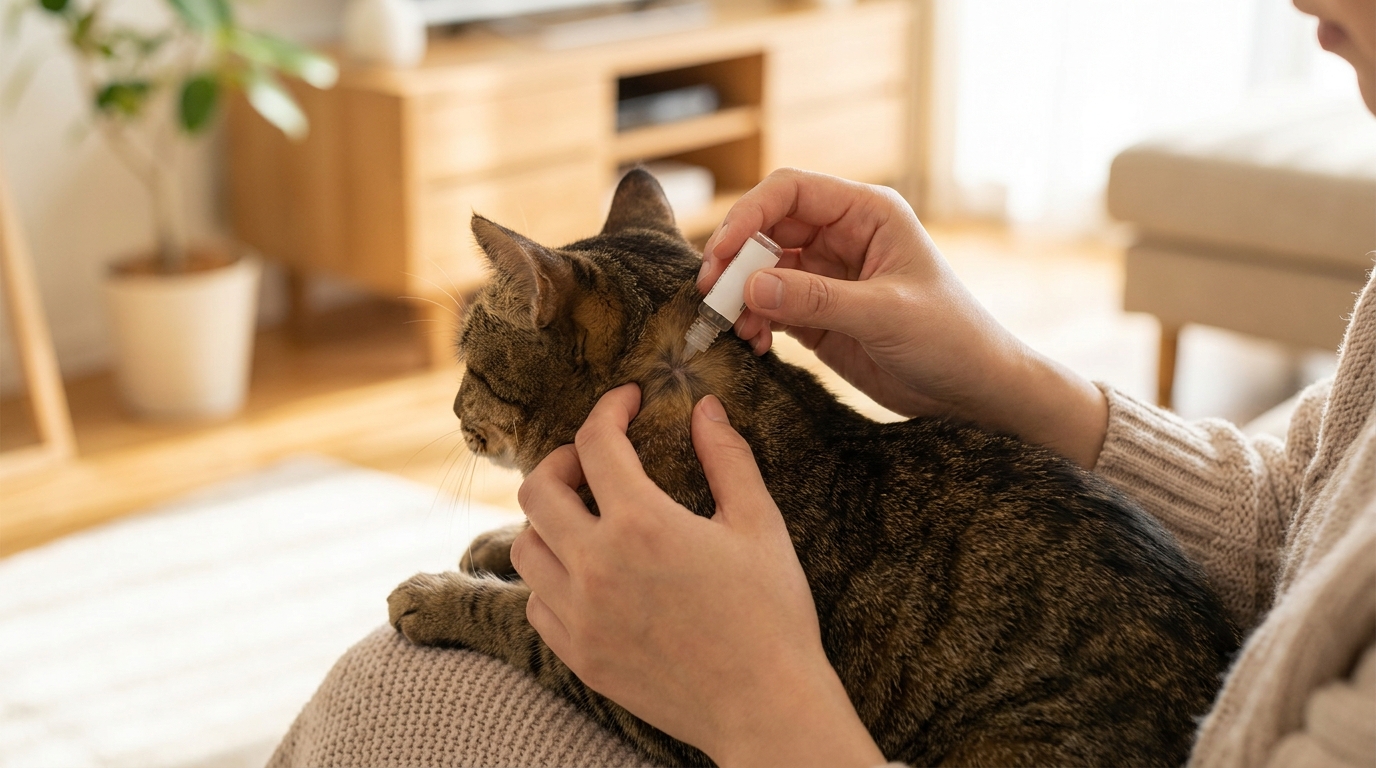
Spot-on dewormers work through topical application: you apply the liquid to the skin, the active ingredients are absorbed, and then they act systemically to target susceptible internal parasites. The biggest practical advantage is better compliance—no wrestling, no hiding tablets in food, and less risk that a partial dose is spat out.
Because it’s topical, correct technique is essential. If the product is applied to the coat rather than directly to the skin, you can reduce effectiveness and waste product. Likewise, if it’s applied somewhere your cat can lick, you may see drooling or foaming from the unpleasant taste, and you may reduce the intended benefit.
Household routine matters too. In multi-cat homes, cats may groom each other, which can spread the product away from the application site and increase the chance of oral exposure. Planning application time (and short-term separation) makes the product easier to use responsibly.
Pros, cons, and who it suits best
Most Profender review summaries come down to convenience. If tablets are a regular battle, a spot-on can make routine worming far more achievable—which is often the difference between an occasional dose and a consistent plan.
- Pros: Easy topical application—helpful for cats that won’t take tablets.
- Pros: Targets specific intestinal worms (check the label for exact coverage).
- Pros: Can simplify routines in multi-cat households where dosing is stressful.
- Cons: It is not a flea/tick product and does not cover heartworm—separate protection may be needed.
- Cons: Application errors (on fur, not skin) can reduce performance and waste product.
- Cons: Some cats may experience mild, temporary skin irritation at the application site.
Profender often suits cats on a steady routine where the goal is targeted intestinal worm control without the drama of oral dosing. It can be particularly practical for cats that are anxious, strong-willed, or skilled at detecting medication in food.
Quick tip: Part the coat and apply to clean, dry skin where your cat can’t easily lick. If you have more than one cat, keep them separated from each other until the application site is fully dry to reduce grooming transfer.
Safety and eligibility: age, weight, and household precautions
Like all parasite treatments, Profender should be used with care and according to the product label. Before you buy, check these key eligibility points:
- Species: Choose a product clearly labelled for cats. Do not assume spot-on products are interchangeable between species.
- Minimum age/weight: Profender packs are formulated for different weight ranges. Use only the pack intended for your cat’s weight and follow label minimum age guidance.
- Pregnancy and lactation: If your cat is pregnant, nursing, or intended for breeding, check the label precautions and speak with your vet if you’re unsure.
- Health status: If your cat is unwell, underweight, or has a history of skin sensitivity, consult your vet before using any spot-on product.
- Multi-cat households: Prevent other cats from grooming the application site until it is dry. This reduces the chance of oral exposure and helps ensure the product stays where it’s needed.
- Human contact: Avoid handling the application area until it has dried, and wash hands after applying.
This article can’t replace personalised veterinary advice. For the safest outcome, follow the label instructions exactly and ask your vet if you have any doubts about suitability, timing, or your cat’s parasite risk.
Is Profender worth it?
For many cat owners, Profender is worth it for a simple reason: it makes worming easier to do properly. Convenience isn’t just about comfort—it can improve consistency, and consistency is a major driver of good parasite control outcomes.
It’s best value when it matches your needs: you want targeted intestinal worm cover (as stated on the label) and you want to avoid the stress and uncertainty of tablets. If you’re looking for a single product to cover worms plus external parasites, Profender may feel less cost-effective because it is designed for worming rather than fleas and ticks.
Bottom line: if your goal is straightforward cat deworming with minimal fuss, Profender can be a smart buy—provided you understand what it does (and doesn’t) cover and you use the correct cat product for your cat’s weight.
Frequently Asked Questions
Is Profender messy to apply?
It usually isn’t, as long as you apply it directly to the skin rather than the coat. Part the fur carefully and apply in the recommended spot so it can absorb properly and dry.
Does Profender treat fleas, ticks, or heartworm?
No. Profender is a dewormer aimed at intestinal worms as listed on its label. It does not treat fleas or ticks, and it is not a heartworm preventative. If you need cover beyond intestinal worms, choose an appropriate separate product and check compatibility with your vet if you’re unsure.
Can I use Profender if my cats groom each other?
Yes, but take precautions. Apply it where your cat can’t easily lick and keep cats separated until the application site is fully dry to reduce grooming transfer.
How do I know if Profender is the right choice for my cat?
It’s a strong option if your main concern is intestinal worms (as per the label) and your cat doesn’t tolerate tablets. If your cat has a complicated health history, is very young, pregnant, or you’re unsure which parasites you need to cover, consult your vet for tailored guidance.
Ready to compare options and choose the right fit? Explore the full range of Profender to find a convenient worming solution for your cat.