

Following a puppy vaccination schedule in Australia is one of the simplest ways to protect your new pup during their most vulnerable months. If you’re wondering when to vaccinate a puppy and what each visit involves, this guide breaks it down step by step.
Medical disclaimer: Vaccine timing and recommendations can vary by state/region, local disease activity, your puppy’s health, and lifestyle risk (for example, boarding, daycare, dog parks, rural properties, or flood-affected areas). Always follow your vet’s advice for your puppy. After any vaccination, seek urgent veterinary care if you notice severe swelling, repeated vomiting, collapse, or any breathing difficulty.
You’ll also learn how puppy shots in Australia typically line up with worming and parasite prevention, so you can plan ahead with confidence.
Typical puppy vaccination timeline (Australia)
Most vets follow a similar puppy vaccination timeline, with a series of injections spaced a few weeks apart. The exact timing can vary depending on your puppy’s age at first visit, health status, and local disease risk.
- 6–8 weeks: First vaccination (often the start of the core series)
- 10–12 weeks: Second vaccination
- 14–16 weeks: Third vaccination (commonly the final puppy dose)
- 6–12 months: Booster after the puppy series
- Ongoing: Adult boosters as recommended (often yearly or every three years depending on vaccine type and vet advice)
If you’ve adopted a pup and don’t know their history, your vet may restart or continue the series based on age. Keeping a written record (or photo) of dates and batch stickers from the clinic helps avoid missed protection or unnecessary repeat doses.
While you’re planning those early visits, it’s also smart to stock up on essentials like a lead, collar, crate, and training treats. You can find handy basics in our puppy supplies range so you’re ready for each milestone.
What vaccinations protect against
In Australia, puppy shots typically include core vaccinations that protect against serious, widespread diseases. Your vet may also recommend non-core vaccines based on lifestyle and exposure (for example, boarding, dog parks, grooming, or high-traffic urban areas).
Common core protection often includes:
- Parvovirus: Highly contagious and tough in the environment
- Distemper: A severe viral disease affecting multiple body systems
- Hepatitis (adenovirus): Can cause significant liver disease
Common lifestyle-based additions may include:
- Kennel cough: Often considered when puppies will be social, boarded, or in training classes. Depending on the product and route (for example, intranasal vs injection), it may have different timing and can require an additional dose—your vet will advise what’s appropriate.
- Leptospirosis: Sometimes recommended in higher-risk regions or after flooding and heavy rain. Recommendations vary by region and lifestyle, so it’s worth confirming with your vet whether it makes sense for your puppy.
Where you live can matter. Warm, humid conditions and busy communal areas can increase disease exposure, especially for young pups still building immunity. That’s why your “best” plan isn’t just about age—it’s also about environment and routine.
What to expect at each vaccination visit
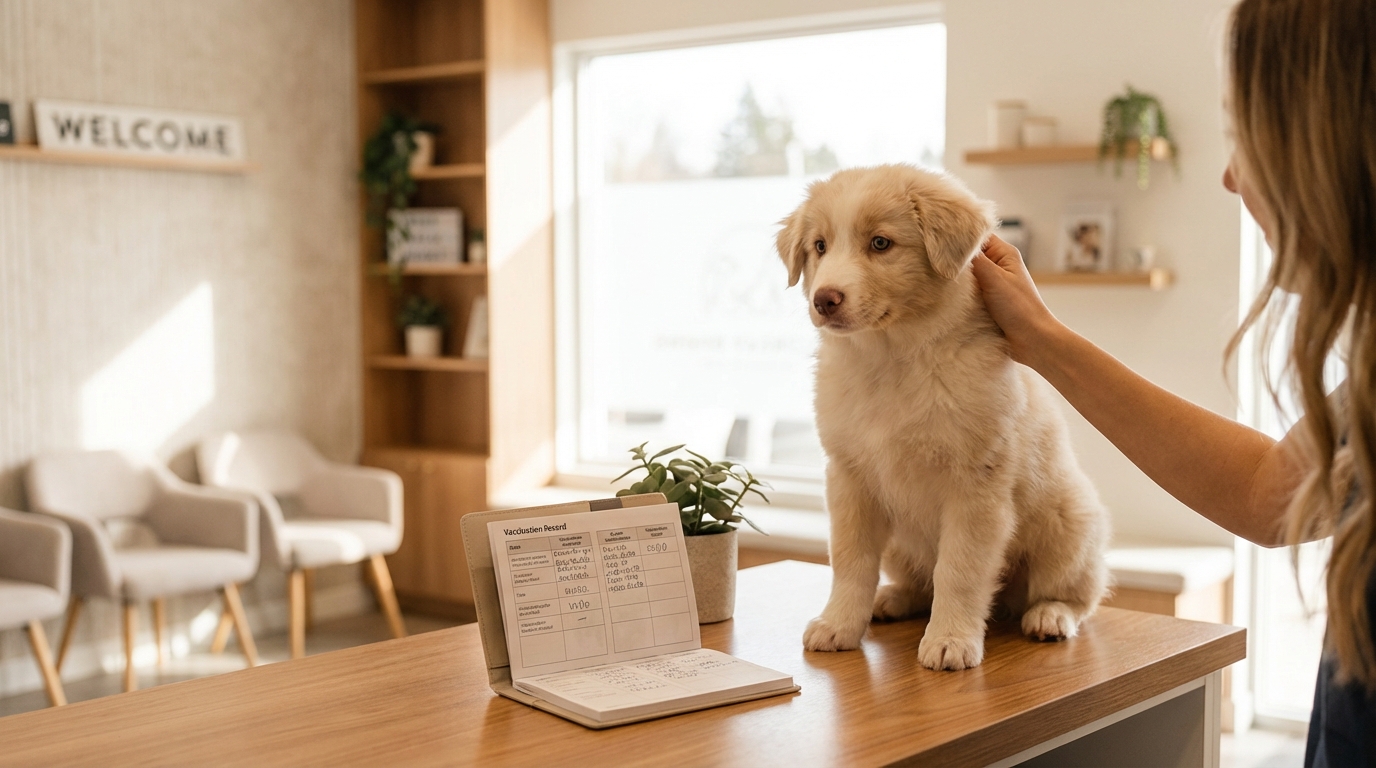
Vaccination appointments are usually quick, but they’re more than just an injection. Your vet will typically do a brief health check, ask about appetite and toileting, and make sure your pup is growing well.
You may also cover:
- Microchipping (if not already done)
- Worming and parasite prevention planning
- Nutrition and weight checks
- Behaviour and training basics (to reduce fear at future visits)
Bring your puppy’s paperwork (breeder/rescue records) and your questions. If your pup has had an upset tummy, coughing, or seems off-colour, mention it—your vet may adjust the timing if your puppy isn’t well on the day.
Quick tip: Put the next vaccine date straight into your phone calendar before you leave the clinic, plus a reminder 3–5 days prior so you can book an appointment that suits your work hours.
Many owners also use vaccination visits as a cue to refresh everyday essentials at home—like a properly fitted harness, chew-safe toys, and cleaning supplies for toilet training. Our puppy supplies collection can help you tick those off in one go.
What to bring to your first vet visit:
- Any records you have: Breeder/rescue paperwork, previous vaccine dates, microchip details, and any medication history.
- A fresh stool sample (if your clinic requests it): A small, well-sealed container can help your vet advise on worming and gut health.
- A way to travel safely: A secure crate, carrier, or seat-belt restraint for car trips—especially helpful if your puppy is nervous.
- High-value treats: Feeding tiny rewards can make handling easier and helps build positive associations.
- Your list of questions: Ask about local disease risk, puppy preschool timing, parasite prevention in your area, and what to avoid between shots.
Aftercare, socialising, and risk management
After vaccination, mild sleepiness or a quieter appetite for a day can be normal. Keep the day low-key, provide fresh water, and avoid strenuous exercise until your puppy is back to their usual self.
The bigger question for many new owners is socialising: you want your pup to meet people, hear noises, and build confidence, but you also want to reduce exposure risk while immunity is still developing.
- Lower-risk social time: Invite healthy, fully vaccinated dogs to your home or meet in a clean private yard.
- Controlled outings: Carry your puppy through busy areas (hardware stores that allow pets, school pickup zones at a distance) so they experience the world without sniffing everything.
- Be cautious with high-traffic dog areas: Dog parks, shared grassed exercise zones, and unknown faeces are higher risk until the puppy series is complete.
How long does immunity take to build? Protection doesn’t switch on instantly after each injection. Immunity generally strengthens across the series, which is why vets usually recommend extra care with higher-risk locations until the final puppy dose has had time to take effect. Your clinic can advise when it’s safer for your pup to start puppy preschool or group training based on the course used and local risk.
If your puppy will start daycare, boarding, or group classes, ask early what vaccine proof is required. This helps you line up timing and avoids last-minute stress.
Costs, reminders, and staying on track
Vaccine costs can vary by clinic, location, and which vaccines are included. Budget for the full series rather than just the first visit, and remember there may be additional charges for things like microchipping, faecal tests, or kennel cough depending on your pup’s needs.
To stay on track:
- Keep a vaccination record: Save the booklet and take a clear phone photo of each page.
- Book ahead: Clinics can be busy during school holidays and pre-Christmas periods.
- Pair it with routine care: Align vaccination dates with regular weight checks, nail trims, and parasite prevention planning.
Vaccines are just one part of a healthy start. In Australia, many puppies also need consistent flea, tick, and heartworm prevention—especially in warmer states and coastal areas where parasites can be active for much of the year. Getting organised early makes it easier to protect your pup as they grow.
Frequently Asked Questions
When should I start my puppy’s vaccinations?
Many puppies begin their first vaccine around 6–8 weeks of age, then continue with follow-up doses every few weeks. If your puppy is older or you’re unsure of their history, a vet can set a catch-up plan based on age and risk.
Can my puppy go outside before finishing the full series?
Yes, but choose low-risk options while immunity is building. Stick to clean private areas and controlled social contact with healthy, vaccinated dogs, and avoid high-traffic dog spots until the course is complete.
What if we miss a vaccination date?
Don’t panic—contact your clinic to rebook as soon as possible. Depending on how late it is, your puppy may be able to continue the series or may need an adjusted schedule to ensure reliable protection.
Do all puppies need kennel cough or leptospirosis vaccines?
Not always. These are commonly discussed as lifestyle- and region-based vaccines. Kennel cough timing can differ depending on the vaccine type, and leptospirosis guidance can vary across Australia and by your dog’s routine (for example, exposure to wildlife, farm environments, or flood-prone areas). Your vet is best placed to advise what’s appropriate for your puppy.
Want to get organised for your pup’s early months? Browse our puppy supplies to prepare for vet visits, training, and day-to-day care—then chat to your vet if you’d like help tailoring the schedule to your area and lifestyle.