

Dog dementia can be confronting: a once-confident mate may start seeming lost in familiar rooms, pacing at night, or forgetting routines. This kind of cognitive decline in older dogs is often linked with canine cognitive dysfunction (CCD), and it typically creeps in slowly. Early, practical support can make day-to-day life calmer for everyone while you work with your vet to rule out other causes.
Signs your older dog’s brain is ageing
Cognitive decline in older dogs can look like “odd behaviour”, but it’s often a pattern of small changes that add up. You might notice your dog staring at walls, getting stuck behind furniture, or hesitating at doorways they’ve used for years. Some dogs become clingier; others seem withdrawn.
- Disorientation: wandering aimlessly, getting lost in the backyard, or appearing unsure in familiar places
- Sleep-wake changes: restless nights, more daytime sleeping, or pacing after dark
- House training slips: accidents indoors despite previously solid habits
- Interaction changes: reduced interest in play, confusion around family members, or increased vocalising
- Anxiety and irritability: startling more easily, grumpiness when approached, or sensitivity to noise
Because these signs can overlap with pain, hearing loss, vision changes, or organ disease, it’s helpful to keep a simple diary: what happened, when, and any triggers (visitors, storms, temperature changes, long days alone). Bring those notes to your vet appointment; it helps speed up decision-making and avoids guesswork.
Rule out look-alike health issues first
Before assuming dog dementia, consider common “mimics” that can drive similar behaviour. Arthritis can make dogs reluctant to move, and dental pain can reduce interest in food or toys. Hearing loss can look like ignoring you; reduced vision can look like disorientation. Urinary tract issues and gastrointestinal discomfort can also contribute to sleep disruption and toileting accidents.
In Australia, hot nights and humid conditions (common through summer and during heatwaves) can worsen restlessness and sleep disruption, especially in warmer regions. If your dog is panting at night or seeking cool tiles, the cause may be heat stress, pain, or illness rather than purely brain ageing. Treat changes in breathing, temperature tolerance, or comfort as important observations to share with your vet.
A useful approach is to address the basics you can control at home while you gather observations: keep routines steady, reduce hazards, and support sleep. Your vet may also discuss options that help some dogs with cognitive changes (such as prescription diets, supplements, or medications), but these should be used under veterinary guidance and tailored to your dog’s health history.
When to see the vet urgently
Book an urgent veterinary visit (or emergency care) if you notice any of the following, especially if it’s sudden or out of character:
- Sudden disorientation (very rapid change over hours to a day), severe confusion, or getting “stuck” repeatedly
- Seizures, collapse, fainting, or episodes of extreme weakness
- Head tilt, circling, loss of balance, or trouble walking that appears quickly
- Signs of pain (yelping, trembling, hunched posture, guarding, refusal to be touched)
- Breathing distress, constant or heavy panting at rest, or pale/blue gums
- Not eating or drinking, repeated vomiting/diarrhoea, or inability to toilet normally
Cognitive changes are usually gradual. A rapid shift is more likely to indicate a medical problem that needs prompt assessment.
Home set-up to reduce confusion and stress
When cognitive decline in older dogs sets in, the environment matters as much as the dog. Think “predictable pathways” and “easy choices”: make the layout obvious and minimise obstacles that can trap or startle them.
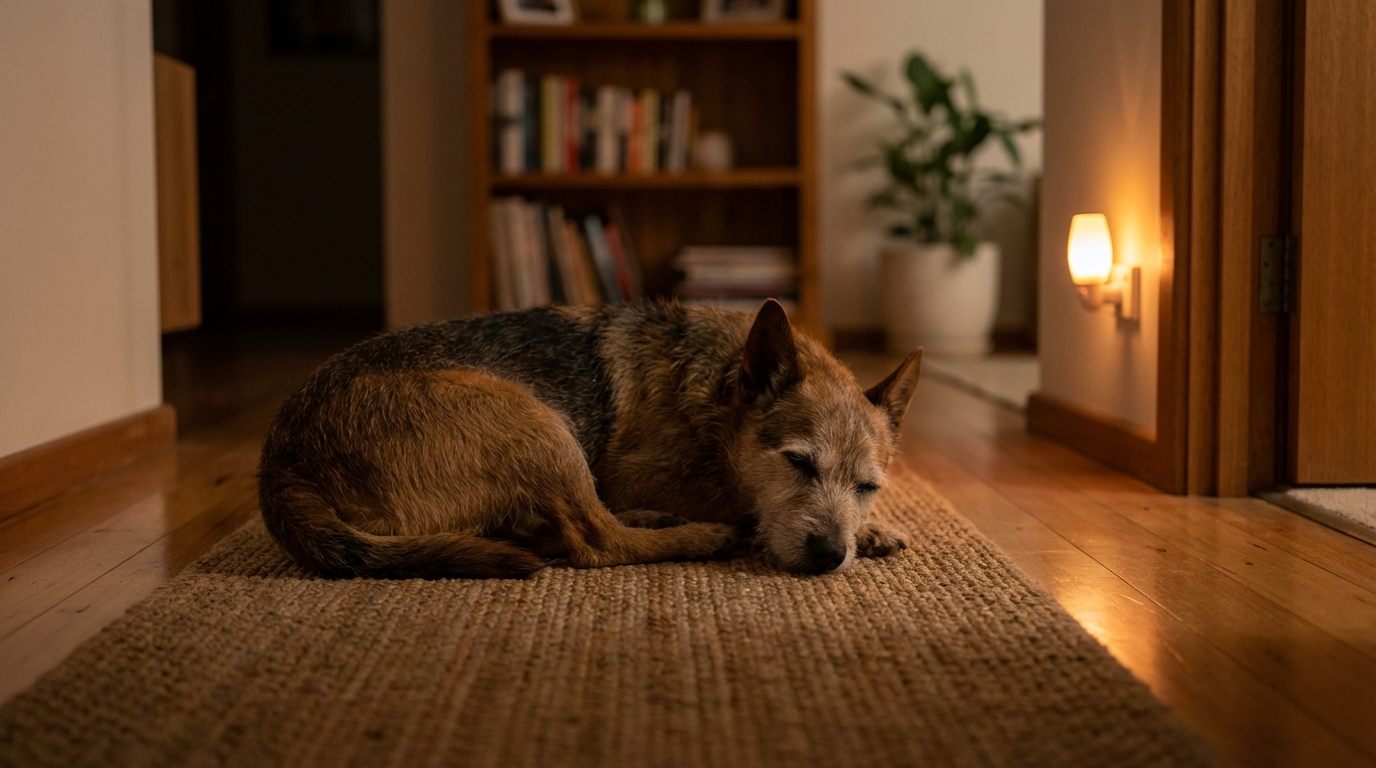
- Lighting: add soft night lights in hallways and near the water bowl to reduce nighttime disorientation
- Traction: use non-slip runners on tiles or floorboards to prevent slips that can increase anxiety
- Stations: keep food, water, bed, and toileting access consistent (avoid moving them around)
- Boundaries: block off stairs or unsafe zones with a barrier to prevent accidents
- Comfort cues: use the same bedding and familiar scents; avoid strong new cleaning fragrances
Quick tip: If your dog gets “stuck” behind furniture, create a wider looped walkway by moving one piece (even 10–20 cm) so they can turn around easily.
For nighttime pacing, set up a calm “sleep zone”: a supportive bed, a light blanket if they feel the cold, and a quiet corner away from street noise. Some dogs settle better when they can see you, so a bed in your room can reduce distress without turning bedtime into a battle.
Routine and enrichment that supports brain health
With cognitive decline in older dogs, the goal isn’t intense training or constant novelty—it’s gentle, consistent mental engagement that helps your dog feel capable and safe. Short, positive sessions can support confidence and reduce stress.
- Micro-routines: feed, walk, and rest at similar times each day
- Simple games: “find it” with a few treats in a snuffle mat or towel roll (easy difficulty)
- Low-pressure training: one or two familiar cues (like “sit” or “touch”) for a reward, then stop
- Scent walks: slow sniffing on lead is excellent enrichment without overtaxing joints
- Social comfort: calm company beats overstimulation—keep greetings gentle and predictable
Keep novelty controlled. One new item or change at a time is usually better than rearranging the whole house or introducing a noisy toy. If your dog startles easily, choose quieter enrichment and avoid high-energy rough play that can lead to frustration. If you’re trialling any new food, supplement, or medication recommended by your vet, change one variable at a time so it’s easier to track what helps.
Daily care essentials: sleep, mobility, and parasites
Dogs coping with brain ageing often have less resilience. That means small health stressors—itch, skin irritation, disrupted sleep, or sore joints—can have a bigger behavioural impact than they once did.
Sleep and calm: Aim for a wind-down routine each evening: a toilet break, a drink, then quiet time. In summer, cooling mats or a fan (not blowing directly on the bed) can help reduce restlessness in humid conditions. If your dog is panting at night, don’t assume it’s only warmth—panting can also reflect pain, anxiety, or illness, so note when it happens and discuss it with your vet.
Mobility support: Joint discomfort can amplify confusion because dogs avoid movement and explore less. Keep walks shorter and more frequent, use gentle warm-ups, and consider ramps or steps for couches and cars to reduce strain. Slips can knock confidence, so prioritise traction on smooth floors.
Parasite prevention: Fleas and ticks can cause persistent itch and agitation, which may look like anxious behaviour or nighttime unsettledness. Staying consistent with season-appropriate protection is part of supporting comfort in older dogs—browse vet-grade options in our flea and tick prevention range, and consider year-round coverage in many Australian regions. If you’re also managing overall senior wellness, our heartworm prevention options can help you keep the routine simple and consistent.
When you’re juggling multiple needs, choose a system you can stick with: set calendar reminders, keep supplies in one place, and log what you’ve given and when. Consistency is kind to you and reassuring to your dog.
Frequently Asked Questions
Can dog dementia come on suddenly?
It usually develops gradually, but owners often notice it “all at once” after a disruption like moving house, a heatwave, or a change in routine. Sudden severe disorientation can also point to other medical problems, so it’s worth treating abrupt changes as a red flag.
How do I manage nighttime wandering and vocalising?
Focus on comfort and predictability: a last toilet break, a low-stimulation evening, and gentle lighting to reduce disorientation. Make sure your dog can access water and a familiar bed, and keep pathways clear to avoid getting stuck. If new night-time restlessness comes with panting, trembling, or reluctance to lie down, check in with your vet to rule out pain or illness.
Will my dog still enjoy life with cognitive decline?
Many dogs continue to enjoy food, sniffy walks, affection, and familiar routines with the right support. The aim is to reduce stress, prevent accidents, and keep daily experiences positive and safe. Your vet can also advise whether diet changes, supplements, or medications are appropriate for your individual dog.
If you’re refining your senior dog’s routine, explore our vet-grade parasite protection ranges for consistent comfort: shop flea and tick prevention and shop heartworm prevention. For personalised guidance on behaviour changes and health checks, chat to your vet.