

Dog dementia can be unsettling: your steady companion may start pacing at night, staring at walls, or seeming lost in familiar rooms. Cognitive changes in ageing pets are common, and the earlier you spot them, the more comfortably you can support day-to-day life. This guide focuses on practical ways to manage cognitive decline in dogs, recognise senior dog dementia symptoms, and make home life calmer—especially when you’re helping an older dog at night.
Signs to watch for in ageing dogs
Cognitive ageing doesn’t look the same in every dog. Some changes are subtle at first, then become more noticeable over months. Many vets group the most common patterns under the DISHA framework (Disorientation, Interaction changes, Sleep-wake changes, House-soiling, Activity changes). You may see one sign first and others later.
- Disorientation: getting “stuck” behind furniture, hesitating at doorways, staring into corners, or appearing lost in the garden.
- Interaction changes: clinginess, irritability, less interest in greeting people, reduced tolerance of handling, or seeming withdrawn.
- Sleep-wake changes: restless nights, pacing, or vocalising after settling; more daytime sleeping.
- House-training slips: accidents despite previously reliable habits, or seeming to forget to ask to go out.
- Activity changes: wandering aimlessly, repetitive behaviours (circling, licking), reduced interest in play, or difficulty settling.
These signs may be consistent with canine cognitive dysfunction (CCD), often described as dog dementia. However, similar behaviours can also come from pain, hearing or vision changes, hormonal issues, or urinary problems. Treat the behaviour as a clue, not a conclusion.
First steps: vet checks, rule-outs, and tracking changes
If you suspect cognitive decline in dogs, the most helpful first step is a veterinary appointment. A check-up can help rule out issues that commonly mimic CCD—such as arthritis pain, dental disease, urinary tract problems, endocrine conditions, and changes to vision or hearing. Your vet can also advise whether supportive therapies, behaviour plans, or medications may be appropriate for canine cognitive dysfunction, based on your dog’s overall health and symptom pattern.
Alongside veterinary guidance, start documenting what you see. A simple weekly note in your phone can reveal patterns you’d otherwise miss, and gives your vet clearer information.
- Write down what happens: time of day, triggers (doorbell, visitors, darkness), and how long it lasts.
- Rate intensity: for example, 1–5 for pacing, vocalising, or disorientation.
- Record appetite, thirst, and toileting: changes here can point to non-cognitive causes.
- Note mobility: stiffness, reluctance to jump, slipping, or slower stairs can suggest pain affecting sleep and behaviour.
- Check practical factors: slippery floors, new furniture layout, or a louder household routine can worsen senior dog confusion.
Also take a fresh look at comfort. Stiff joints, skin irritation, or dental pain can make an older dog restless and “not themselves”. Supporting comfort often improves sleep and confidence, even when cognitive ageing is part of the picture.
Home set-up to reduce stress and confusion
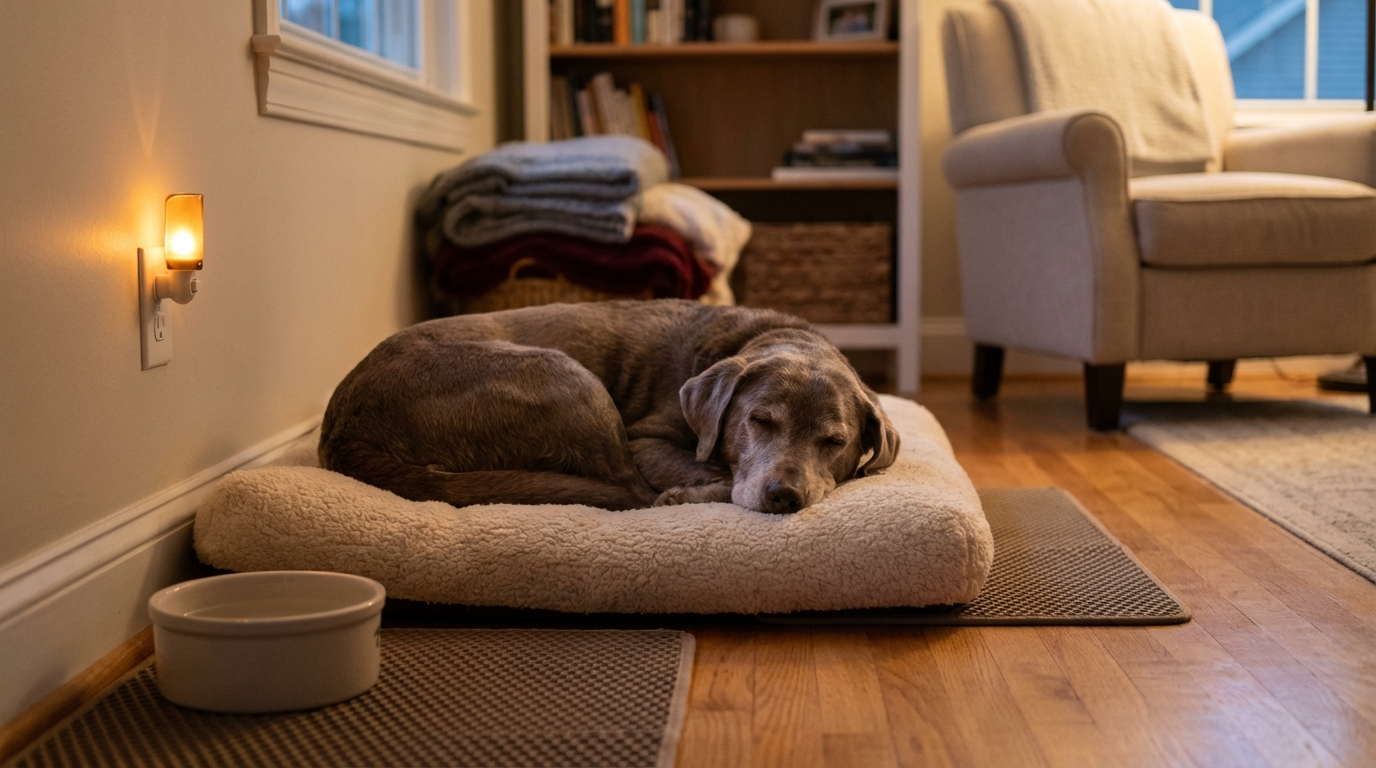
Small environment tweaks can make a big difference for a dog who’s becoming uncertain. Aim for predictable, easy navigation and safe footing.
- Create clear routes: keep walkways open and avoid frequently moving furniture.
- Improve traction: use runners or non-slip mats on slippery surfaces, especially between bed, water, and the door.
- Use gentle lighting: a dim night light can reduce evening disorientation and startle responses.
- Set up “comfort stations”: a familiar bed in a quiet area, water nearby, and a second bed where your dog tends to pace.
- Block hazards: baby gates for stairs or rooms where your dog might get stuck or become distressed.
Quick tip: Keep bowls and beds in the same spots every day. Consistency helps an older dog navigate with confidence when memory and processing slow down.
If accidents are becoming more common, focus on management rather than punishment. Add more toilet breaks, use washable covers, and consider a designated easy-clean area overnight. If your dog seems surprised by accidents, or is straining or urinating more often, book a veterinary check rather than assuming it is cognitive.
Daily routine: exercise, enrichment, and a simple schedule
Dogs with cognitive changes usually do best with calm predictability plus gentle brain work. The goal is to keep your dog engaged without overwhelming them, and to reduce the “wired and tired” cycle that can drive night-time restlessness.
Keep exercise regular and appropriate. Shorter, more frequent walks often work better than one long outing. Let your dog sniff; scenting is mentally enriching and can reduce anxious pacing later. If your dog has mobility issues, choose steady, low-impact movement and avoid sudden changes in intensity.
Offer easy “win” enrichment. Use food puzzles that aren’t too complex, scatter feeding in a small safe area, or a snuffle mat. If your dog becomes frustrated, simplify the task so it stays rewarding.
- Refresh cues: quick sessions of sit, touch, or hand targeting help maintain routine and confidence.
- Use consistent signals: pair verbal cues with hand signals for dogs with hearing decline.
- Build a wind-down routine: a calm evening toilet break, then a predictable settle routine can ease night-time pacing and vocalising.
Sample daily routine (adjust to your dog):
- Morning: toilet break, breakfast, short sniff-walk, then rest in a quiet space.
- Midday: toilet break, gentle enrichment (snuffle mat or scatter feed), brief cue refresher (1–3 minutes), then rest.
- Late afternoon: second short walk; keep the route familiar if your dog startles easily.
- Evening: dinner, calm interaction (stroking, grooming if enjoyed), then low-stimulation time.
- Bedtime: final toilet break, dim lighting, settle in the same sleep area with stable access to water.
When senior dog dementia symptoms spike, reduce novelty temporarily: fewer visitors, quieter routes, and predictable mealtimes. Once settled, reintroduce stimulation gradually so confidence grows rather than crashes.
Supportive care: nutrition, comfort, and parasite control
Support for canine cognitive dysfunction (CCD) is multi-factorial: nutrition, daily comfort, and overall health maintenance work together. While no single product “fixes” cognitive ageing, consistent supportive care can improve quality of life and reduce avoidable triggers for anxiety and disrupted sleep.
Nutrition and supplements. Some senior dogs benefit from diets and supplements formulated for ageing brains, often focusing on antioxidants, omega fatty acids, and specific nutrients that support normal nervous system function. Choose reputable, veterinary-grade options and introduce changes slowly to avoid tummy upset. If your dog is on other treatments or has health conditions, ask your vet before adding new supplements.
Comfort and skin health. Itching and irritation can make any dog restless; in an older dog with cognitive changes, interrupted sleep can worsen night-time confusion. Staying on top of parasites helps protect comfort and can reduce scratching-related wake-ups.
- Shop flea and tick prevention to help keep itching and skin flare-ups from interrupting rest.
- Browse heartworm prevention as part of a consistent, year-round wellness routine.
Consistency matters. Whatever supportive approach you choose, keep it steady for several weeks and track changes. Many owners notice the biggest improvements when routine, enrichment, and comfort needs are addressed together—especially when helping an older dog at night.
When to seek urgent veterinary help
Book urgent veterinary care (or emergency care if needed) if you notice any of the following, as they may indicate a problem beyond gradual cognitive ageing:
- Sudden, marked disorientation that develops over hours or a day (rather than slowly over months).
- Seizures, collapse, severe wobbliness, or repeated stumbling.
- Rapid behaviour change such as extreme agitation, panic, or inability to settle despite comfort measures.
- New aggression, especially if your dog seems painful, startled, or confused.
- Straining to urinate, frequent small urinations, blood in urine, or crying when toileting.
- Severe lethargy, not eating, or significant vomiting/diarrhoea alongside confusion.
Even when symptoms seem mild, it is worth arranging a routine veterinary check if changes are progressing, disrupting sleep, or affecting toileting and daily comfort.
Frequently Asked Questions
How can I tell if my dog has cognitive changes or is just getting old?
Normal ageing can include slower movement or more naps, but persistent disorientation, disrupted sleep-wake patterns, or sudden house-training slips can suggest cognitive changes. Tracking patterns for a few weeks helps you see whether behaviours are increasing or staying stable, and helps your vet rule out pain, urinary disease, endocrine issues, or sensory loss.
What helps with night-time pacing and vocalising?
If you’re helping an older dog at night, start with a predictable evening routine: a calm walk, a final toilet break, then a quiet sleeping area with gentle lighting. Improve traction, keep furniture placement consistent, and make sure your dog can easily find water and their bed. If night restlessness escalates quickly or comes with distress, book a veterinary check to look for pain or medical triggers.
Should I change my dog’s routine if they seem confused?
Usually, keeping routine consistent helps. If confusion is worse in busy or unpredictable moments, simplify the day temporarily (quieter walks, fewer changes at home), then add gentle enrichment back in once your dog is settled.
Can fleas or other parasites affect sleep in older dogs?
Yes. Itching and skin irritation can disturb rest, and broken sleep can make senior dog confusion worse. Keeping parasite control consistent supports comfort and can remove one avoidable trigger for night waking. If you’re supporting an ageing dog at home, keep comfort and prevention simple and consistent: explore our flea and tick and heartworm ranges, and chat to your vet if behaviour changes are sudden or rapidly worsening.