

There’s no single birthday that turns every dog into a senior overnight. Most dogs transition gradually, and the timing depends heavily on size, genetics, body condition, and lifestyle. The most helpful approach is to know the typical age ranges and watch for small, consistent shifts in mobility, energy, weight, and daily habits.
What makes a dog “senior”?
“Senior” is more of a life stage than a fixed age. Many dogs start to feel older when recovery is slower, stamina dips, or routine tasks (jumping onto the sofa, climbing stairs, longer walks) look harder than they used to. Those changes can appear earlier in larger dogs and later in smaller dogs.
It also helps to think in terms of a transition period. Your dog may be “mature adult” for a while before clearly entering their senior years. During this time, small adjustments often make a big difference—especially around comfort, weight management, and routine health checks.
- Small breeds: often show senior changes later.
- Medium breeds: commonly shift into senior life during the later adult years.
- Large and giant breeds: often age faster and benefit from earlier support.
Size-to-age guidelines (with a simple table)
If you want a quick rule-of-thumb for when dogs enter their senior years, size is a practical place to start. Use the guide below as a starting point, then let your dog’s behaviour and comfort level fill in the details.
| Dog size | Typical senior onset (approx.) | What you might notice first |
|---|---|---|
| Small breeds | Around 10–12 years | Subtle dental changes, gradual weight creep, slower recovery |
| Medium breeds | Around 8–10 years | Stiffness after rest, reduced stamina, longer naps |
| Large / giant breeds | Around 6–8 years | Mobility changes, hesitation with stairs/jumping, soreness |
Note: These are broad guidelines. Individual dogs can shift earlier or later depending on genetics, weight, underlying conditions, and fitness.
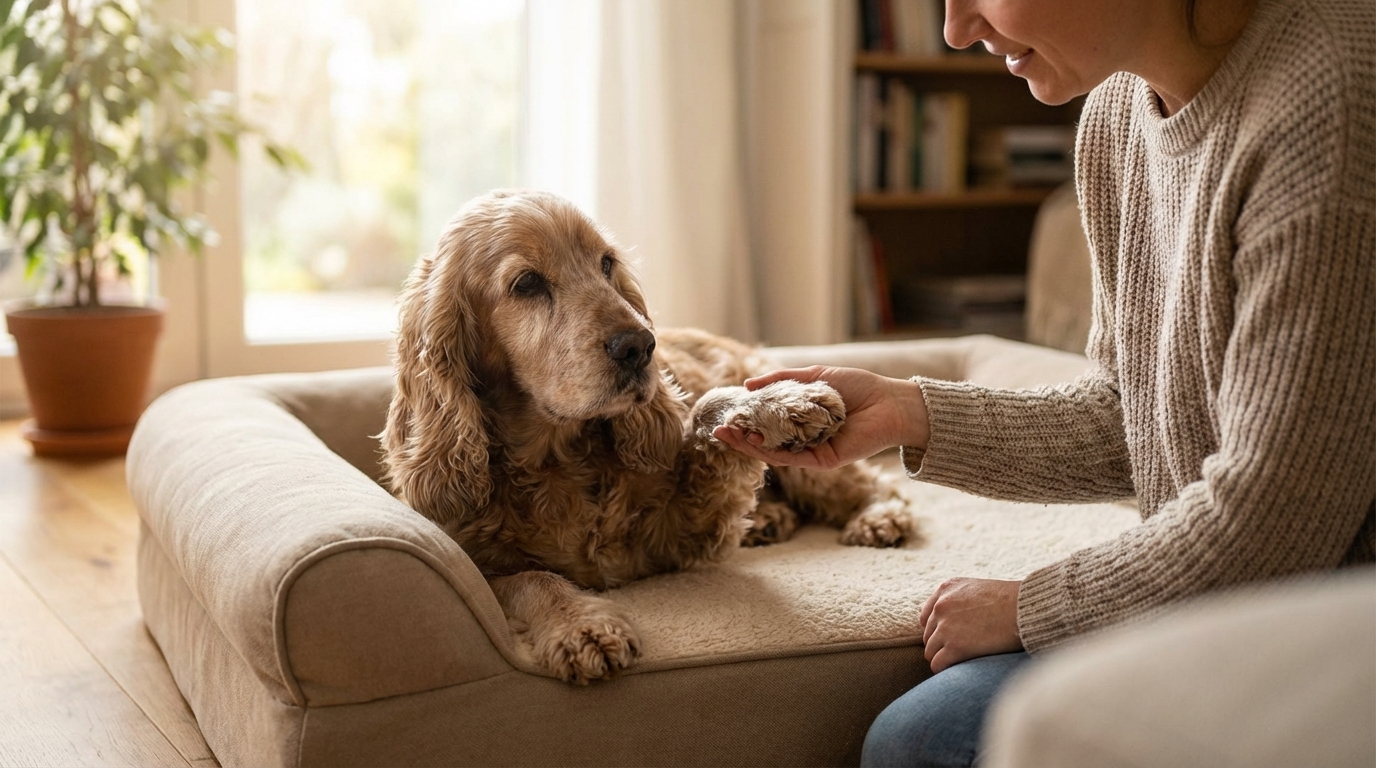
Early signs your dog is ageing (and what they can mean)
Ageing can be subtle at first. The most useful approach is noticing what’s new for your dog and whether it’s consistent, worsening, or affecting quality of life.
- Slower on walks or less interest in play: may reflect reduced stamina, joint stiffness, or general soreness.
- Stiffness after rest: common as dogs get older, especially first thing in the morning or after naps.
- Weight gain (or unexpected weight loss): weight can creep up with reduced activity; unexplained weight loss needs prompt attention.
- Cloudy-looking eyes or bumping into things: gradual vision changes are easy to miss at home.
- Hearing changes: not responding to cues may be hearing loss, distraction, or discomfort.
- Dental changes: bad breath, slower eating, dropping kibble, or favouring one side can indicate mouth pain.
- Sleep pattern shifts: more daytime napping, restlessness at night, or seeking extra reassurance may appear over time.
- Behaviour changes: clinginess, irritability, or reduced tolerance can be a signal they don’t feel quite right.
See your vet promptly if you notice: sudden weight loss, persistent coughing, collapse or fainting, a major behaviour change, difficulty standing or repeated slipping, or blood in urine or stool.
These signs don’t automatically mean something serious, but they are meaningful data points. Noticing patterns early makes it easier for your vet to pinpoint what’s going on—and for you to adjust routines before discomfort builds.
Simple at-home checks to track change
You don’t need a medical set-up to monitor ageing. A few consistent checks help you spot trends and describe them clearly if you ever need to.
- Monthly weight and body feel: check ribs (you should feel them with light pressure) and note waist shape.
- Mobility notes: observe how they rise from lying down, use stairs, jump into the car, and settle into bed.
- Coat and skin scan: look for thinning coat, dandruff, new lumps/bumps, or sore spots from lying more.
- Mouth check: gently lift lips to look for red gums, tartar build-up, or sensitivity.
- Toilet habits: track increased urgency, accidents, straining, or changes in stool consistency.
Quick tip: Take one clear photo of your dog standing side-on every month. Small body shape changes are easier to spot in photos than in day-to-day memory.
If you’re unsure whether your dog is truly entering their senior years, tracking gives you a personalised answer. When several changes stack up (for example mobility + sleep + weight), that often marks the start of the senior stage for that individual dog.
Senior vet check-ups and screening: what to expect
Home observations are valuable, but regular veterinary check-ups are where subtle issues are often caught early. As dogs age, problems can develop quietly—so having a plan for routine screening can protect comfort and quality of life.
How often? Many vets recommend at least one check-up a year for healthy adult dogs, and more frequent visits for seniors. A practical baseline for older dogs is a check-up every six months, because changes can happen faster in later life.
Common senior screening discussions may include:
- Dental assessment: checking gums, teeth, pain, and signs of infection (dental disease can affect appetite and overall wellbeing).
- Weight and body condition scoring: small gains can worsen joint strain; unexplained loss may need investigation.
- Joint and mobility assessment: watching gait, range of motion, muscle loss, and discomfort signs linked to arthritis.
- Heart and lung check: listening for murmurs or changes that can link to coughing or reduced stamina.
- Bloodwork and urine testing: useful for spotting early organ changes before symptoms are obvious.
- Skin and lump checks: monitoring new growths and deciding what to measure, sample, or simply keep an eye on.
Bring your notes (and those monthly photos if you have them). A short timeline—when you first noticed changes, what’s getting worse, what’s stayed stable—makes the appointment far more productive.
Practical ways to support an ageing dog day to day
Once your dog starts showing consistent “older dog” changes, aim for comfort, consistency, and gentle conditioning rather than dramatic overhauls.
- Shorter, more frequent exercise: keep movement regular without pushing to fatigue. Warm up slowly and finish calmly.
- Grip and joint-friendly surfaces: use runners or non-slip mats where they turn quickly or get up often.
- Better sleep set-up: consider a supportive bed in a draft-free, quiet spot so they can rest without stiffness.
- Easy access to essentials: keep water, food, and favourite resting areas close to reduce unnecessary jumping.
- Gentle mental enrichment: scent games, food puzzles, and short training refreshers keep brains busy without overdoing physical strain.
- Diet and treat audit: older dogs often need fewer calories; adjust portions gradually to keep a steady body condition.
If you’re making changes, introduce them one at a time. That way you can tell what actually helps—and what might be causing new fussiness or upset stomachs.
Why consistent parasite prevention matters more in older dogs
As dogs age, their ability to bounce back from everyday stress can decrease. Keeping routines steady—including year-round parasite control—helps reduce avoidable discomfort.
Fleas and ticks can trigger itching, skin inflammation, and secondary infections that may be harder on older bodies. Heartworm prevention remains important at any age, and it’s easier to maintain a steady schedule than to correct missed doses later.
- Set a reminder: align parasite protection with a simple monthly routine.
- Choose something you can give reliably: some dogs do better with chewables, others with spot-ons—consistency matters.
- Check the coat regularly: senior dogs may groom less, so quick hands-on checks help you spot issues early.
To keep protection simple, explore our dog flea and tick treatments and heartworm treatments and choose an option that suits your dog’s needs and your routine. If you’re unsure what’s most appropriate, your vet can advise based on age, weight, and health history.
Frequently Asked Questions
How can I tell if my dog is ageing or just being lazy?
Look for change over time rather than a one-off quiet day. If stamina, mobility, or enthusiasm drops for weeks—especially with stiffness, weight change, or altered sleep—it’s more likely age-related than simple mood.
What are the most common early senior changes owners miss?
Subtle stiffness after rest, gradual weight creep, and dental discomfort are often overlooked. Small behaviour shifts—like hesitating before jumping, avoiding stairs, or being less tolerant of handling—can be early clues too.
Does breed size affect when dogs become seniors?
Yes. Larger breeds tend to reach senior life earlier, while smaller breeds often stay “adult” longer. Your dog’s individual history, body condition, and activity level also influence timing.
Ready to support your dog’s next life stage? Stock up on reliable, veterinary-grade flea, tick, and heartworm preventatives from Atlantic Pet Products and keep your routine consistent; if you’re unsure what’s best for your dog’s needs, chat to your vet.