

Noticing your dog slowing down and wondering when the “senior” stage really begins? There’s no single birthday that applies to every dog, but size, genetics, and overall health can give you a useful guide. The key is spotting gradual shifts early so you can adjust daily care before small issues become bigger problems.
When does “senior” start for dogs?
Dogs don’t all age at the same pace. As a practical rule, smaller breeds often stay “adult” for longer, while large and giant breeds tend to show age-related changes earlier. These are only guideposts—your dog may reach their senior years sooner or later depending on body condition, activity levels, dental health, previous injuries, and long-term medical history.
Helpful age guide by size:
- Small dogs: often considered senior at around 10–12+ years.
- Medium dogs: often around 8–10+ years.
- Large dogs: often around 6–8+ years.
- Giant dogs: often around 5–7+ years.
Numbers aside, many owners first notice the senior stage when their dog is “mostly the same” but with a few new quirks—taking longer to get comfortable, needing more recovery time after exercise, or becoming less keen on jumping. Tracking those subtle changes over time is usually more useful than trying to pick one exact birthday.
Common signs your dog is ageing
Early signs of ageing can be easy to miss because they often look like normal tiredness or a temporary off day. What matters is a pattern—changes that are persistent, progressive, or showing up in several areas at once.
- Movement changes: stiffness after rest, reluctance to jump, slower stairs, shorter walks, or slipping on smooth floors.
- Energy and recovery: more naps, shorter bursts of play, and taking longer to “bounce back” after activity.
- Weight and muscle shifts: gradual weight gain from reduced activity, or visible muscle loss (often across the back end) even if the scales barely change.
- Senses: more startle responses, hesitating in low light, not responding to soft cues, or sniffing more to navigate.
- Coat and skin: duller coat, drier skin, new lumps and bumps, or a change in how quickly the coat grows back after clipping.
- Mouth changes: bad breath, dropping food, chewing on one side, or avoiding crunchy textures.
- Toilet habits: needing to go out more urgently, occasional accidents, straining, or new restlessness overnight.
- Behaviour and routine: clinginess, irritability, pacing, or seeming disoriented in familiar spaces.
Any one sign might have a simple explanation. Several together—especially if they’re new—often indicates your dog is moving into their senior years and could benefit from a routine refresh and a health check.
Simple at-home checks to track change
You don’t need specialist equipment to spot meaningful trends. A quick weekly routine helps you tell the difference between “just a quiet week” and a real shift that deserves attention.
- Body feel check: run your hands over ribs, hips, shoulders, and along the spine to notice early weight gain or muscle loss.
- Mobility snapshot: watch how your dog stands up from lying down, turns, and sits—stiffness often shows up in these transitions first.
- Breath and mouth glance: lift the lips briefly to look for red gums, tartar build-up, broken teeth, or sore-looking areas.
- Water and wee notes: if the bowl empties faster than usual, the house-training changes, or night-time trips increase, write it down with dates.
- Sleep and comfort: note new pacing, frequent position changes, or reluctance to settle—these can be subtle clues that your dog is uncomfortable.
Quick tip: Take one photo each month from the side while your dog is standing. Comparing photos can make slow changes in posture, body shape, and coat condition much easier to spot.
Senior care upgrades that make a real difference
Once your dog is entering their older years, small adjustments can make day-to-day life noticeably easier—without turning your routine into a medical project. Aim to reduce strain, keep exercise enjoyable, and support comfort at home.
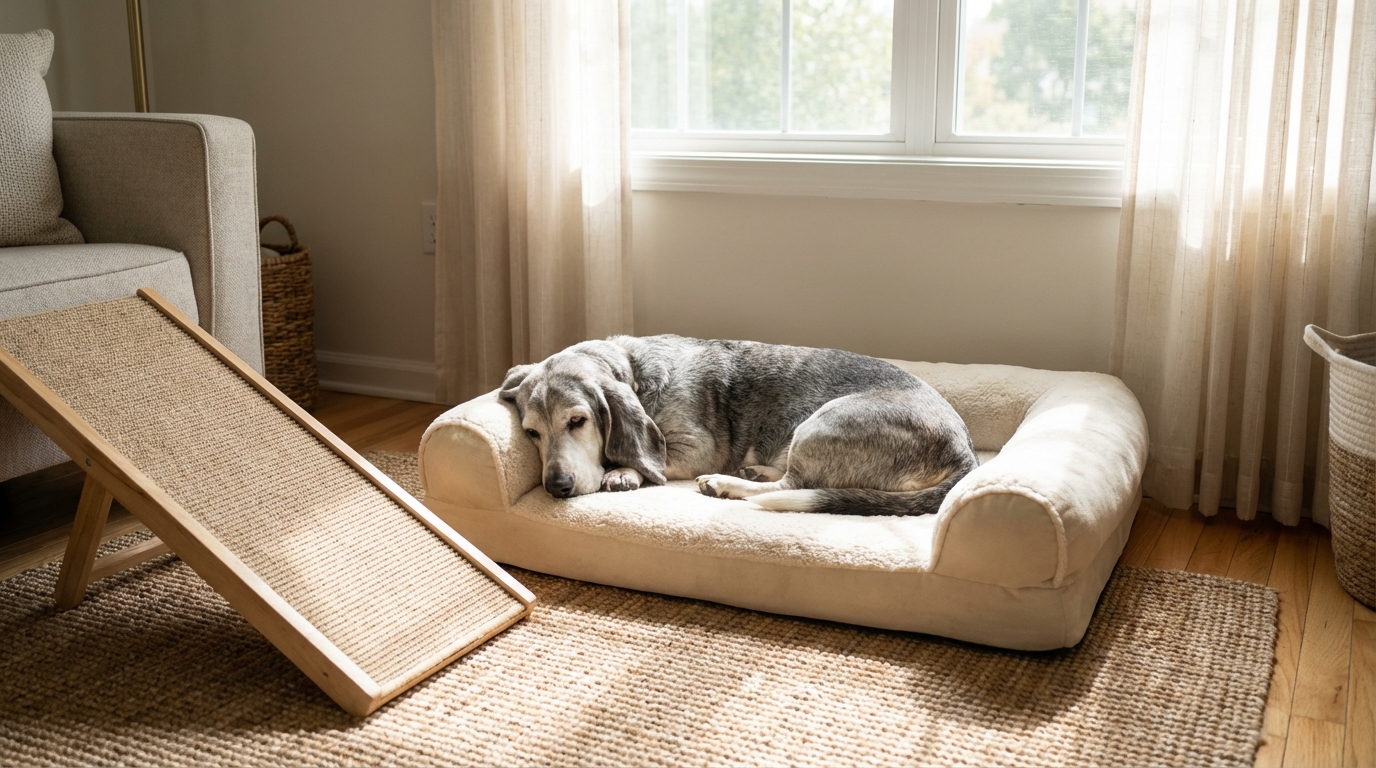
- Make movement easier: add a non-slip runner on slick floors, use a ramp for the car/sofa, and keep nails neatly trimmed for better traction.
- Refine exercise: swap long “weekend warrior” sessions for shorter, more frequent walks. Gentle consistency is often kinder than bursts of intensity.
- Protect sleep quality: choose a supportive bed and place it away from draughts and busy walkways so your dog can rest undisturbed.
- Support confidence and brain health: keep training light and positive—simple cues, food puzzles, and sniffy walks can help maintain routine and engagement.
- Prioritise dental habits: daily brushing is ideal, but even a few times per week helps. If brushing isn’t realistic, aim for a dental routine your dog will accept and keep your vet updated on changes.
If you’re building out a practical home routine, browse our Senior Pet Health range and consider keeping a small set of essentials on hand. You can also explore our Dog Health products to support day-to-day wellbeing as needs change.
Parasite prevention in older dogs: keep it consistent
Older dogs still need reliable protection from fleas, ticks, and heartworm. In fact, when skin is more sensitive or recovery is slower, parasite irritation and secondary skin problems can be more disruptive than they used to be. Consistency matters: missed doses can create gaps that are easy to overlook until itching, hair loss, or general discomfort is already established.
When choosing and using parasite-prevention products, keep these safety basics in mind:
- Follow label directions carefully, including how often to apply and any age or weight limitations.
- Check suitability for your dog’s individual health: some products may not be appropriate for certain medical conditions or when taking particular medications.
- Ask your vet if you’re unsure, especially if your dog is older, has ongoing health issues, or you’re changing products.
If you’re reviewing your routine, our Flea & Tick and Heartworm Prevention categories make it easy to compare options and stay organised.
When to see a vet (don’t wait)
Ageing itself isn’t an illness, but some changes shouldn’t be put down to “just getting older”. Arrange a vet visit promptly if you notice any of the following:
- Sudden or unexplained weight loss (or rapid weight gain)
- Persistent coughing, laboured breathing, or reduced exercise tolerance
- Collapsing, fainting, or severe weakness
- Marked changes in drinking or urination, new accidents, or straining
- Severe pain, yelping, or significant lameness that lasts more than a day
- New confusion, disorientation, or sudden behaviour changes
Also book a check-up if a lump appears, grows, changes shape, or starts bleeding, or if your dog’s appetite and mood change for more than a couple of days. Catching problems early often makes management simpler and improves comfort.
Frequently Asked Questions
Is there a clear age when a dog becomes a senior?
Not a single age for every dog. As a general guide, small dogs often become senior around 10–12+ years, medium dogs around 8–10+ years, large dogs around 6–8+ years, and giant dogs around 5–7+ years. Individual health and lifestyle can shift this earlier or later.
What are the earliest signs of ageing I should look for?
The earliest changes are often mobility-related: taking longer to stand, hesitating to jump, tiring sooner on walks, or slipping on smooth floors. Subtle changes in sleep, playfulness, and behaviour can also appear early.
Should I change my dog’s routine as they get older?
Yes—aim for small, gradual adjustments. Shorter, more frequent exercise, supportive bedding, safer footing at home, and consistent dental and parasite-prevention routines can make a real difference. If changes feel sudden or severe, speak with your vet.
Reference note: General senior-care principles align with guidance commonly shared by veterinary organisations such as the World Small Animal Veterinary Association (WSAVA), including the value of regular health monitoring and early intervention as pets age.
Ready to support your dog’s next life stage? Stock up on reliable essentials in our Senior Pet Health collection and keep protection consistent with our Flea & Tick options.