

Medical disclaimer: This article provides general information and is not a substitute for veterinary advice, diagnosis, or treatment. If you’re worried about your dog’s behaviour or health, or before starting any supplements or making major routine changes, book a veterinary check.
Dog dementia can look like small, everyday changes at first — getting stuck behind furniture, staring at walls, or seeming “not quite themselves”. In clinical terms, many of these age-related behaviour changes fall under canine cognitive dysfunction (CCD), sometimes described as canine cognitive dysfunction syndrome. As changes progress, many owners notice disrupted sleep, new anxiety, or house training slip-ups. The good news: practical routines, gentle enrichment, and a calm home set-up can make day-to-day life with cognitive decline easier for both you and your dog.
Signs your older dog may be struggling
Cognitive decline often shows up as behaviour changes rather than obvious illness. You might notice your dog seems disorientated in familiar rooms, pauses as if they’ve forgotten what they were doing, or struggles to settle.
- Disorientation: pacing, getting stuck in corners, staring into space, hesitating at doors.
- Changed social interaction: becoming clingier, withdrawing, or reacting differently to family members.
- Sleep-wake disruption: restless nights, wandering, vocalising, sleeping more during the day.
- House training slip-ups: accidents indoors, asking to go out then seeming unsure why.
- New anxiety: startle responses, sensitivity to sounds, reluctance to be alone.
These patterns can align with dog dementia or canine cognitive dysfunction, but similar signs can also come from pain, hearing or vision loss, or other age-related health changes. Tracking what you see (when it happens, triggers, and how long it lasts) is one of the most useful first steps.
Vet checks: rule out other causes and know when it’s urgent
Rule out other causes first
Before assuming senior dog confusion is purely cognitive, consider other common contributors. Arthritis pain, dental disease, tummy discomfort, urinary issues, and reduced vision or hearing can all change behaviour and sleep. Your vet can help sort out what’s most likely and what can be treated or managed.
At home, do a quick “comfort audit”: is your dog hesitating on slippery floors, avoiding stairs, licking at a sore spot, chewing more slowly, or reacting when you touch certain areas? These clues help you support them better, whether the root cause is cognitive, physical, or a mix of both.
Important: If you’re considering supplements, calming aids, or major diet changes, speak with your vet first. Some products can be unsuitable for certain medical conditions or may interact with other treatments.
When to see the vet urgently
Cognitive decline is usually gradual. Seek prompt veterinary assessment if you notice any of the following:
- Sudden onset of disorientation, circling, head tilt, or loss of balance
- Seizures, collapse, fainting, or episodes of extreme weakness
- Marked pain (crying out, guarding, sudden aggression, reluctance to move)
- Rapid behaviour change over days (new confusion, panic, or agitation that escalates quickly)
- Persistent vomiting, diarrhoea, or refusal to eat alongside behaviour changes
- Straining to urinate, blood in urine, or repeated accidents with signs of discomfort
Even when it does turn out to be canine cognitive dysfunction, a vet visit can help identify treatable contributors and create a supportive plan that prioritises comfort and quality of life.
Create a calm, predictable home set-up
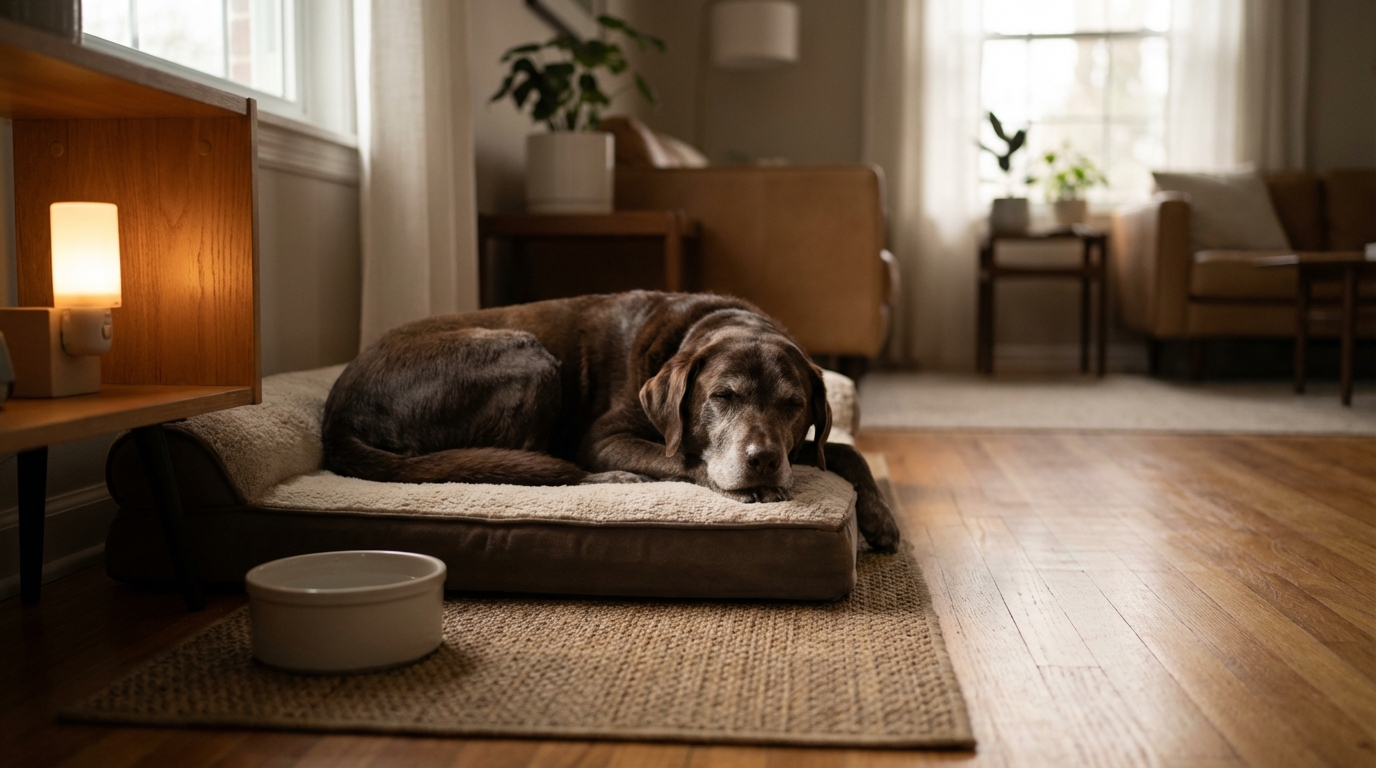
Dogs coping with dog dementia often do best with predictability. Keep feeding, toileting, walks, and bedtime at similar times each day, and avoid frequent layout changes in the home.
- Make navigation easy: leave clear pathways, avoid clutter, and keep furniture in the same positions.
- Reduce slipping: add runners or mats on smooth floors to build confidence.
- Support rest: provide an easy-to-access bed in a quiet area; consider a second bed closer to the family for reassurance.
- Use gentle lighting: a dim night light can help dogs who become unsettled after dark.
Quick tip: If your dog gets “stuck” behind doors or furniture, block off tight gaps and create wider turning spaces — it can reduce panic and night-time wandering.
If you use crates or baby gates, keep them in the same place and introduce changes slowly. Predictability reduces stress, and lower stress can mean fewer episodes of pacing, vocalising, or agitation.
Canine cognitive dysfunction (CCD): what it means in practice
Canine cognitive dysfunction (CCD) is a clinical term vets use to describe age-related changes in brain function that affect behaviour, sleep, learning, and awareness of the environment. Not every older dog will develop CCD, and many will have a combination of cognitive and physical changes.
For owners, the practical goal is often the same regardless of label: reduce confusion, prevent accidents and injuries, and support calmer days and nights. That usually comes down to a few priorities:
- Consistency: a steady daily rhythm with fewer surprises
- Safety: secure tight gaps, reduce slipping, and make favourite resting spots easy to reach
- Comfort: pain-management plans guided by your vet, cosy rest areas, and a quiet retreat space
- Confidence-building enrichment: short, achievable activities that don’t overwhelm
If you suspect CCD, bring your notes to the vet: when the behaviour happens, what seems to trigger it, any sleep changes, and whether toileting habits have shifted. Clear observations can speed up the process of ruling out other causes and tailoring support.
Support brain and body with daily habits
While cognitive decline can’t be “trained away”, gentle enrichment and supportive habits can help your dog feel more settled and engaged. Aim for short, successful activities rather than longer sessions that frustrate them.
Try gentle enrichment:
- Sniffing games: scatter a portion of food in the grass or hide treats in easy-to-find spots.
- Simple puzzle feeding: choose beginner options with low frustration and quick wins.
- Micro-training: 1–2 minute refreshers of familiar cues (sit, touch, find it) using calm praise.
- Low-impact movement: steady walks and controlled play to support mobility and sleep quality.
Build in more toileting breaks. Many older dogs need extra opportunities to go out, especially later in the day. If accidents are becoming frequent, focus on prevention (more breaks, easy access) instead of correction.
Keep stress low. If your dog becomes anxious with visitors, loud noises, or busy routines, give them a quiet retreat. A calmer day often leads to a calmer night, which helps everyone cope better.
Make the “good choices” easy. Place water near favourite resting spots, keep everyday items in predictable locations, and use calm guidance if they get stuck or forget where they’re going. For some dogs, using a lead indoors during unsettled periods (with supervision) can reduce aimless wandering and help them find the right door for toileting.
Don’t overlook parasite care for seniors
When you’re managing behaviour changes, it’s easy to focus only on cognition — but general health maintenance still matters. Fleas, ticks, and intestinal worms can cause itching or discomfort that disrupts sleep and increases restlessness, which can look like (or worsen) agitation in an older dog.
Keep preventive care consistent and ask your vet what’s appropriate for your dog’s age and health status. To stay organised, set a simple reminder and keep essentials on hand by browsing flea and tick prevention and heartworm prevention options that suit your dog’s size and life stage.
Frequently Asked Questions
How do I tell the difference between normal ageing and dog dementia?
Normal ageing tends to be gradual and mild, like slower movement or sleeping a bit more. Dog dementia (often discussed clinically as canine cognitive dysfunction) is more likely when you see ongoing disorientation, changes in social interaction, sleep disruption, and new house training issues that persist or worsen over time. A vet check is the best way to rule out pain or illness that can mimic cognitive change.
Why is my older dog restless at night?
Night-time restlessness can be part of cognitive decline, but it can also be linked to pain, needing the toilet, itching, or anxiety. Try a consistent bedtime routine, a night light, an easy-to-reach bed, and an extra late toileting break. If the change is sudden or escalating, speak with your vet promptly.
What helps with senior dog confusion day-to-day?
Predictability helps most: familiar layouts, clear pathways, short enrichment your dog can succeed at, and a steady routine for meals, walks, and sleep. Reduce slipping hazards, add gentle lighting after dark, and guide your dog calmly rather than introducing lots of change at once.
For day-to-day organisation, keep your essentials on hand — including flea and tick prevention and heartworm prevention. If you’re considering supplements or major routine changes, check with your vet first to make sure they’re suitable for your dog.