

Dog dementia can creep in so gradually that it’s easy to dismiss as “just ageing” — until daily routines start to unravel. In many dogs, these changes are linked to canine cognitive dysfunction (CCD), often referred to as canine dementia. If you’re noticing your pet getting lost in familiar spaces, sleeping at odd times, or seeming less responsive, you may be seeing cognitive changes rather than stubborn behaviour. The good news: there are simple, practical steps that can reduce stress and help many older dogs cope better.
Medical note: This article offers general guidance only. New or worsening behaviour changes should be assessed by a vet to help rule out pain, endocrine disease, urinary tract issues, vision/hearing loss, or neurological disease.
Early signs to watch for
Cognitive decline in older dogs often shows up as small changes in awareness, learning, and behaviour. You might notice your dog staring at walls, pausing in doorways, or seeming unsure about where they’re meant to go. Some pets become clingier, while others withdraw and interact less.
Common patterns include:
- Disorientation: getting “stuck” behind furniture, wandering aimlessly, or pacing.
- Changed sleep-wake cycle: restlessness at night, sleeping more during the day.
- House training slips: toileting indoors despite previously reliable habits.
- Social changes: less greeting, reduced play, or new irritability.
- Learning and memory shifts: forgetting cues, seeming slow to respond, or repeating the same actions.
Senior dog confusion can look like anxiety, stubbornness, or hearing loss, so it helps to keep a brief diary of what you’re seeing (what happened, time of day, and any triggers). That record makes it easier to spot trends and discuss next steps.
Home setup to reduce stress and accidents
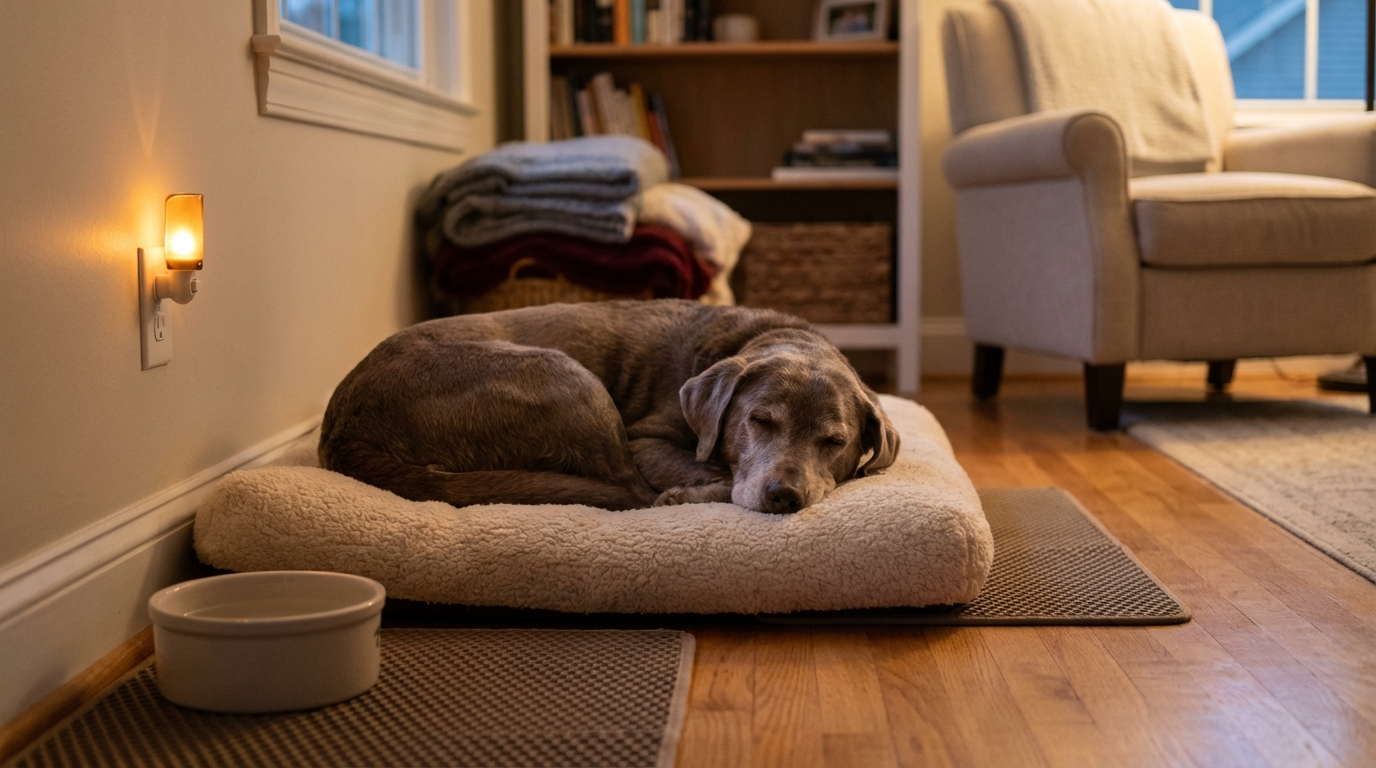
When an older dog feels unsure, the environment can either calm them or overwhelm them. Aim for predictable, easy navigation: clear pathways, consistent furniture placement, and gentle lighting in the evening. If your dog startles easily, reduce sudden noises and avoid busy, cluttered areas.
Helpful adjustments for daily comfort:
- Non-slip footing: add runners or mats on slippery floors to prevent falls and boost confidence.
- Simple “zones”: keep food, water, bed, and toileting area in consistent, easy-to-reach places.
- Night-time guidance: use a soft night light in hallways so your dog can orient themselves.
- Safe boundaries: use baby gates to block stairs or rooms where your dog may get trapped.
Quick tip: If your dog paces in the evening, try a short, calm lead walk at the same time nightly, then guide them to a quiet bed area with low light and minimal stimulation.
Accidents can increase with dog dementia, so make “success” easier. More frequent toilet breaks, easier access to outdoors, and quick clean-up routines reduce stress for both of you. If your dog struggles to settle, consider placing their bed in a quieter spot away from drafts and household traffic.
Daily routine: exercise, enrichment, and sleep
Routine is a powerful tool for dogs with cognitive decline because it reduces decision-making and uncertainty. Keep feeding, walks, and bedtime consistent, and introduce changes slowly. Even small shifts (a new feeding location or different walking route) can trigger confusion in some seniors.
Movement supports comfort, brain engagement, and mood. Choose gentle, low-impact activity that matches your dog’s ability: shorter walks more often, sniff-focused strolls, or light play that doesn’t require sudden turns. If your dog has stiff joints, warming up slowly and keeping sessions brief can help them enjoy movement without overdoing it.
Mental enrichment should be achievable, not frustrating. Try:
- Food puzzles with simple mechanics
- Scatter feeding in a small, familiar area
- Short training refreshers using well-known cues
- “Find it” games with a favourite treat or toy
Sleep can become fragmented. Help your dog wind down with a predictable evening routine: calm interaction, dim lights, and a comfortable bed. If your pet becomes unsettled at night, avoid overstimulating play or exciting visitors late in the day.
When to see a vet
If you suspect CCD, a veterinary check is important — not only to discuss supportive care, but also to look for medical problems that can mimic cognitive changes. Book an appointment sooner rather than later if you notice:
- Sudden onset of disorientation, staring, or aimless wandering (rather than a slow, gradual change).
- Seizures, collapse, or episodes where your dog seems “not present”.
- Acute confusion after a fall, a new medication, or an illness.
- Rapid changes in thirst, appetite, weight, toileting, or sleep.
- Signs of pain (reluctance to jump, stiffness, yelping, or guarding).
- New incontinence, straining, frequent urination, or strong-smelling urine.
Bring your diary notes and, if possible, short videos of behaviours like pacing, head pressing, or night-time restlessness. Clear examples can make it easier for your vet to narrow down likely causes and decide what to investigate.
Health support and what to rule out
Not every behavioural change is cognitive. Pain, vision or hearing loss, urinary issues, and endocrine problems can all affect sleep and behaviour. A dog who is itchy at night, for example, may pace and seem unsettled — which can look like cognitive changes from the outside.
Because older dogs often have multiple needs at once, keep a baseline of “normal” for your pet: appetite, thirst, toileting frequency, energy, and mobility. If you’re trialling supportive changes at home, introduce them one at a time so you can tell what’s helping (and what may be adding stress).
It can also help to remove avoidable sources of discomfort. Ongoing parasite protection matters for seniors, too. Fleas and ticks can trigger irritation, sleep disruption, and secondary skin problems that amplify restlessness and confusion. Staying consistent with protection is one practical way to reduce an extra burden on an older dog.
Build a simple routine around your pet’s lifestyle, and shop from trusted categories such as flea and tick treatments and heartworm prevention. If your dog is already on a plan, set reminders so you don’t miss doses, as gaps can lead to avoidable setbacks.
Frequently Asked Questions
How can I tell if this is dog dementia or normal ageing?
Normal ageing often looks like gradual slowing down and needing more rest. Canine dementia (CCD) is more likely to include disorientation, changed sleep patterns, and new confusion in familiar routines. Tracking behaviours over a couple of weeks helps you see whether changes are consistent or progressing — and gives your vet clearer information.
What helps with senior dog confusion at night?
Keep evenings predictable: a calm toilet break, low lighting, and a quiet sleeping area. Reduce late-night stimulation, and make sure your dog can easily find water and their bed without navigating obstacles. If night-time waking is new or severe, arrange a vet check to rule out pain or medical causes.
Can enrichment help dogs with cognitive decline?
Gentle, achievable enrichment can support confidence and reduce boredom-related anxiety. Focus on simple sniffing games, easy puzzle feeders, and short refreshers of familiar cues rather than demanding new training.
To keep your senior comfortable and consistent with parasite care, explore our flea and tick treatments and heartworm prevention options. If you’re seeing fast or distressing changes, chat to your vet to help rule out pain or medical issues that can mimic cognitive decline.