

This new puppy checklist covers the practical basics you’ll want ready before paws hit the floor. If you’re wondering what to buy for a puppy, start with the items that keep them safe, comfortable, and easy to care for from day one.
Use this guide as your go-to puppy essentials list, then add extras once you know your pup’s size, coat type, and routine.
Set up your home for safety and comfort
Before you bring your puppy home, do a quick walk-through at puppy height. Remove chewable hazards, block off no-go zones, and make sure cords, plants, and small objects are out of reach.
- Crate or playpen: A secure space helps with settling and prevents accidents when you can’t supervise. Choose one that allows your pup to stand, turn, and stretch comfortably.
- Baby gates: Useful for keeping your pup near you without full free-roam of the house.
- Collar or harness + lead: A comfortable fit is essential for early walks and training. Consider an ID tag holder even if you’ll add the tag later.
- Chew-safe toys: Offer a few textures to redirect teething away from furniture.
- Car restraint: A crash-tested harness or secured crate keeps travel calmer and safer.
If you’re building your shopping basket and need a single place to start, browse our puppy supplies collection for day-one staples.
Food and feeding gear
Feeding is one of the first routines your puppy will learn, so keep it simple and consistent. Your breeder or rehoming organisation may recommend the current food; sticking with it initially can help avoid tummy upsets.
- Puppy food: Pick a complete diet formulated for growth. If you plan to change food, transition gradually over several days.
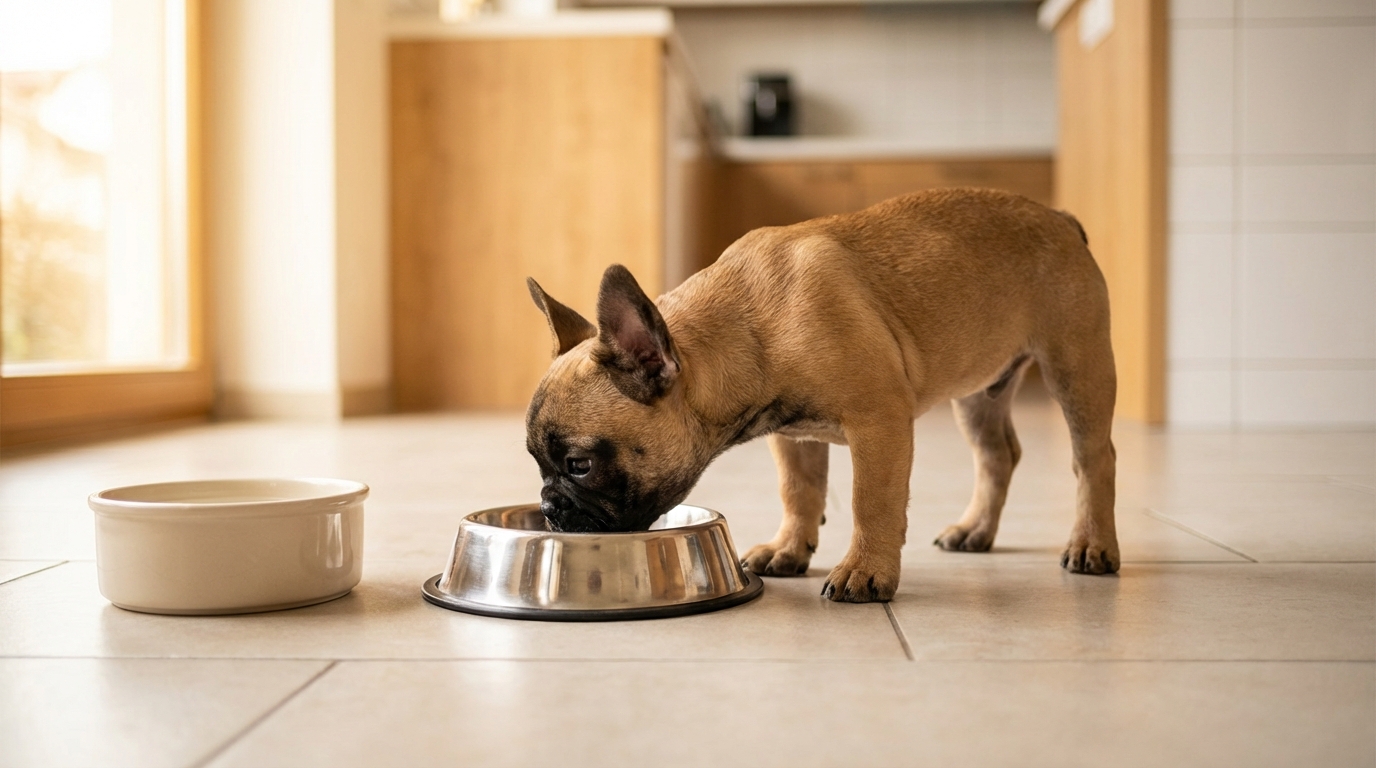
- Food and water bowls: A sturdy, easy-to-clean set reduces spills. Non-slip bases help excitable eaters.
- Measuring scoop: Supports consistent portion sizes and makes training treats easier to factor into the day.
- Training treats: Small, soft pieces work best for quick rewards without overfeeding.
- Food storage container: Keeps kibble fresh and makes feeding time tidy.
Not sure what to buy for a puppy when it comes to feeding? Prioritise one reliable food, two bowls, and a treat pouch or container—then refine as you learn your pup’s appetite and schedule.
Sleeping, training, and everyday routines
A predictable routine helps your puppy settle faster and reduces stress behaviours like whining and chewing. Aim for a calm sleeping setup, frequent toilet breaks, and short, positive training sessions.
- Bed and blankets: Choose washable options and consider having a spare set for accidents.
- Toilet training supplies: Puppy pads (optional), enzymatic cleaner for accidents, and a designated toilet area plan.
- Clicker (optional): Handy for marking good behaviour precisely, especially for new trainers.
- Long-lasting chew: Helps self-soothing during crate time and teething.
- Basic toys: A tug toy, a ball, and a food-dispensing toy can cover most early enrichment.
Quick tip: Set alarms for toilet breaks every 1–2 hours on day one, plus immediately after waking, eating, playing, and training. You’ll prevent most accidents before they happen.
This is the heart of any new puppy checklist: safe sleep, consistent toilet breaks, and daily mental stimulation. Keep training sessions short (1–3 minutes) and end on a win.
Grooming, hygiene, and clean-up
Grooming isn’t just about looking good—it’s about handling practice and health checks. Start gently from day one so brushing, nail trims, and baths become normal rather than scary.
- Brush or comb: Match the tool to the coat type. A soft brush suits short coats; longer coats may need a comb too.
- Puppy shampoo: Use a gentle formula designed for dogs, and avoid over-bathing.
- Nail clippers or grinder: Introduce slowly with treats and brief sessions.
- Dental care: A dog toothbrush and toothpaste support long-term oral health; start with short, calm handling.
- Poop bags: Keep them near the lead, in the car, and by the door for easy grabs.
- Lint roller + washable throws: Practical for protecting sofas while your puppy learns house rules.
As your puppy essentials list grows, prioritise the items that make daily care easier: the right brush, an accident cleaner, and hygiene basics you’ll use every week.
Health basics and parasite prevention
Your day-one shopping should include a few health essentials that prevent problems, not just fix them. Start with a basic first-aid kit, then plan your ongoing prevention routine.
- First-aid basics: Bandage wrap, antiseptic wipes suitable for pets, tweezers, and a digital thermometer (plus your vet’s phone number stored on your mobile).
- Weight tracking: A set of scales (or a consistent way to weigh) helps you choose correctly sized products as your puppy grows.
- Parasite prevention: Choose a reliable flea, tick, and heartworm prevention option suited to your puppy’s age and size, then set calendar reminders so you don’t miss a dose.
- Worming plan: Keep a written schedule so you know what was given and when.
Shopping for these items is often the moment people ask what to buy for a puppy beyond toys and bowls. If you want to streamline it, explore our range of puppy supplies and build a simple, repeatable routine from the start.
Frequently Asked Questions
How do I prioritise my purchases if I’m on a budget?
Start with safety, feeding, and a secure rest area: crate/playpen, lead and collar or harness, bowls, food, and an enzymatic cleaner. Add grooming tools, extra toys, and accessories after you’ve learned your puppy’s size and preferences.
How many toys does a puppy actually need?
A small rotation is better than a huge pile. Aim for 4–6 toys across different types (chew, tug, fetch, and a food puzzle) and swap them every few days to keep interest high.
What’s the easiest way to stay consistent with parasite prevention?
Pick one routine and automate it with reminders on your phone or calendar. Keep the product stored with your puppy’s grooming items so it’s part of a regular “care day” rather than an afterthought.
Ready to tick everything off your new puppy checklist? Shop our puppy supplies to stock up for day one, and chat to your vet if you’d like help choosing the best prevention plan for your pup.