

Good senior cat care is built on noticing small changes early and keeping routine checks simple and consistent. Many cats are considered “senior” from around 7 years+ (sometimes earlier for some breeds), and older cats often hide discomfort, so your regular at-home observations become a powerful part of supporting comfort between vet visits. Below are practical checks you can do at home, plus clear prompts for when it’s time to book an appointment to support long-term senior cat health.
Start with a simple health baseline
At-home checks work best when you know what “normal” looks like for your cat. Pick one day a month to note weight, appetite, drinking, litter tray habits, grooming, and energy. Keep it brief: a few bullet points is enough to spot trends without turning it into a chore.
Do a quick head-to-tail scan while your cat is relaxed. Look for new lumps, scabs, dandruff, or sensitivity to touch. If something changes and stays changed for more than a few days, add it to your notes and consider whether it warrants a sooner vet visit.
- Coat: glossy vs. dull, greasy, or matted
- Eyes: clear vs. discharge, squinting, or redness
- Nose: normal breathing vs. noisy or crusty
- Body: new lumps, pain response, heat, or swelling
If you can, take a short video once a month of your cat walking and jumping up to a low surface. Comparing clips over time can help you notice subtle changes that are easy to miss day-to-day.
Weight, appetite and hydration checks
Unplanned weight loss is one of the most important red flags to catch early. Weigh your cat monthly (or fortnightly if they’re already slim) using bathroom scales: weigh yourself, then weigh yourself holding your cat, and subtract.
Contact your vet promptly if your cat loses more than 5% of their bodyweight in a month (even if they seem otherwise fine), or if you notice steady loss over several weigh-ins.
Also watch for subtle appetite shifts: eating slower, favouring certain textures, dropping food, or walking away and returning repeatedly. “Picky” can sometimes be a clue to nausea, dental discomfort, or reduced sense of smell, especially in older cats.
- Water intake: noticeably more frequent drinking or bigger puddles in the bowl
- Toilet changes: larger clumps, more frequent urination, constipation, or stools outside the tray
- Vomiting: occasional hairballs vs. repeated vomiting, foam, or bile
Hydration safety note: “skin tenting” is not a reliable way to assess hydration in cats, particularly in seniors, and dehydration needs veterinary assessment. Instead of trying to judge it yourself, focus on trends (drinking more or less, fewer wee clumps, dry/tacky gums, lethargy) and arrange a vet check if you’re concerned.
Book a vet visit if you see persistent vomiting (for example, more than once in 24 hours or recurring over several days), marked lethargy, refusal of food, or a clear change in thirst/urination that lasts beyond a day.
Quick tip: Take one clear photo of your cat from above each month. Comparing body shape over time can reveal gradual weight loss before the scales do.
Litter tray monitoring: small clues that matter
The litter tray is one of the simplest daily “health reports” you have. You don’t need to measure everything, but paying attention to patterns can help you spot early changes you might otherwise miss.
- Clump size and number: a sudden increase can go with increased drinking; fewer, tiny clumps can indicate reduced intake or reluctance to use the tray.
- Straining or repeated trips: frequent squatting with little output, vocalising, or restlessness in and out of the tray should be treated as urgent.
- Constipation signs: very small hard stools, straining, or skipping stools for more than a day.
- Accidents: going beside the tray can be pain, stress, tray aversion, or a mobility issue (not “naughtiness”).
Urgent warning: if your cat is repeatedly trying to urinate but passing little or no urine, seems distressed, or cries in the tray, seek veterinary help immediately. This is especially urgent for male cats, where a urinary blockage can become life-threatening quickly.
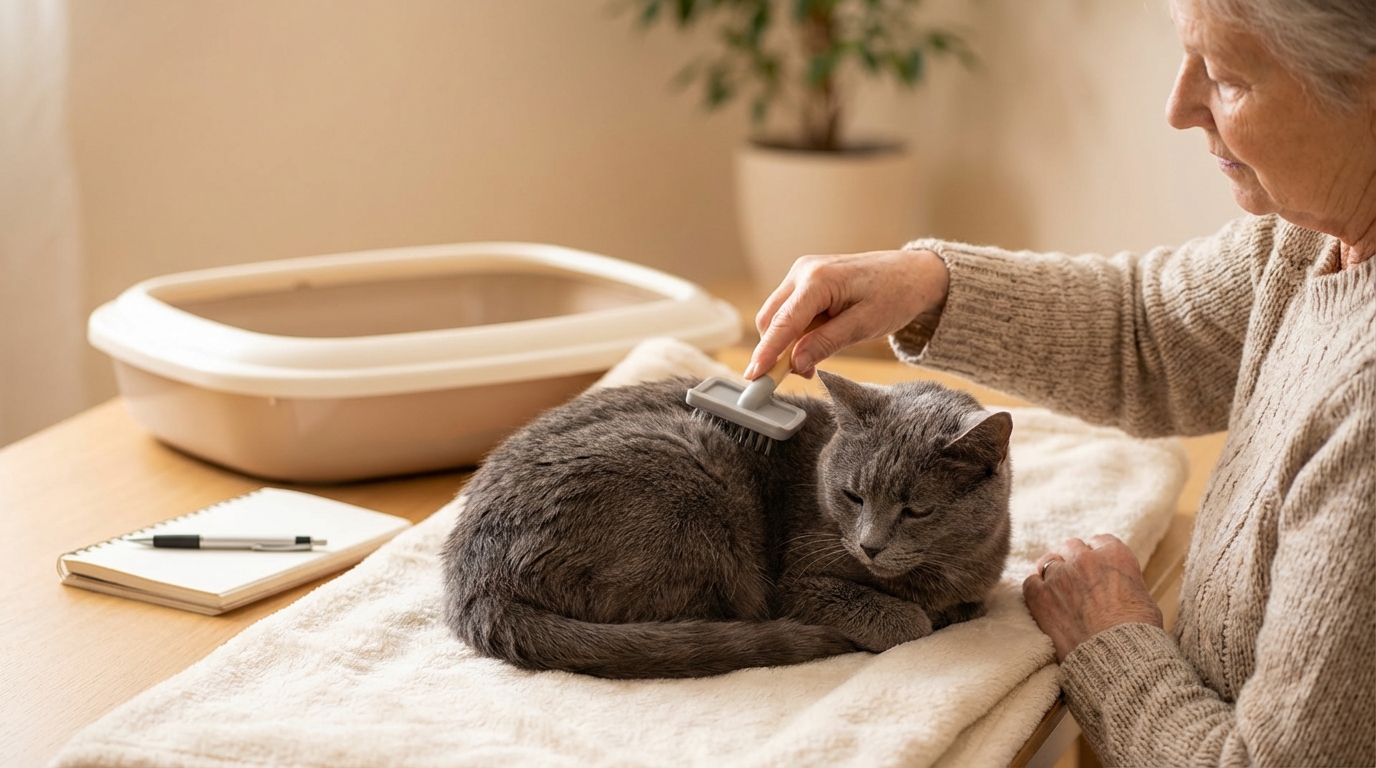
Make the tray easy to use: choose a lower-sided option, keep it in a quiet spot with easy access, and scoop daily so your cat isn’t discouraged by odour or a full tray. If your cat has started avoiding the tray, also consider whether the location, litter texture, or the height of the sides has become uncomfortable for them.
Teeth, gums and breath: the overlooked check
Dental disease is common in senior cats, and it can affect eating, mood, and overall wellbeing. A quick weekly mouth check is one of the most practical routines you can do at home.
Lift the lip for a two-second look rather than forcing the mouth open. You’re checking for red gum lines, tartar build-up, broken teeth, drooling, or breath that’s new or worsening.
- Signs of discomfort: pawing at the mouth, chewing on one side, dropping food
- Appearance: inflamed gums, yellow/brown tartar, bleeding
- Behaviour: head shyness, irritability, reduced grooming
If your cat tolerates it, introduce gentle tooth brushing with a cat toothbrush and feline toothpaste. Start by letting them lick the paste, then build up to a few strokes, keeping sessions short and calm. If brushing isn’t realistic, keep the visual check going and raise dental changes with your vet sooner rather than later.
Mobility, grooming and behaviour changes
Senior cat care isn’t just about organs and appetite; it’s also comfort and confidence. Many older cats develop stiffness, but they often show it as behaviour change rather than obvious limping.
Watch how your cat gets up, uses stairs, jumps onto favourite spots, and enters the litter tray. Look for hesitation, taking jumps in stages, avoiding certain rooms, or choosing lower resting places. These can be subtle signs of discomfort.
- Grooming: mats on the lower back, dandruff, oily coat, or overgrooming patches
- Sleep and sociability: hiding more, less tolerance of handling, restlessness at night
- Vocalisation: new yowling (especially at night) or calling more than usual
Support comfort with practical home tweaks: a lower-sided litter tray, ramps or steps to favourite windowsills, and extra-soft bedding in warm, quiet places. Keeping nails trimmed can also reduce slipping and help traction on smooth floors.
Parasite protection and skin checks
Parasites don’t stop being a risk with age, and senior cats can be less resilient to irritation and secondary skin issues. Make a weekly habit of checking the coat for flea dirt (tiny black specks that turn reddish when dampened) and looking around the neck, base of tail, and belly for scabs or redness.
Choose consistent prevention that suits your cat’s lifestyle, and avoid ad-hoc switching that can create gaps in routine. If your cat scratches more than usual, don’t assume it’s “just age” — itch can be a sign your approach needs reviewing.
- Fleas and ticks: many owners choose easy-to-apply spot-ons or longer-wear collars to keep routines simple
- Worming: a scheduled approach (often via tablets or other vet-recommended formats) helps avoid missed doses
- Heartworm: steady, year-round routines help keep protection predictable
Simple product-utility tips: for comfort and easier daily care, consider a low-entry litter tray and a soft grooming brush for cats who are grooming less. For prevention routines, pick one format your cat tolerates well and stick with it (for example, spot-ons or collars), then set reminders so doses aren’t missed. If you use tablets, keep them in a consistent place and pair dosing day with a calm, predictable reward routine.
Atlantic Pet Products specialises in veterinary-grade preventatives, so you can set up a simple routine and restock on time without last-minute panic.
Frequently Asked Questions
How often should I do at-home checks for a senior cat?
A quick visual and behaviour check can be done weekly, with weight and notes logged monthly. The goal is consistency: small trends are easier to catch when you’re comparing like-for-like.
When should I schedule senior wellness blood/urine checks?
Ask your vet what schedule suits your cat, but many practices recommend wellness screening for older cats about every 6–12 months, even if they seem well. It can be sensible to book sooner if you notice ongoing changes such as weight loss, increased thirst, bigger wee clumps, new vomiting, reduced grooming, or reduced activity. These checks are used to build a baseline and to monitor change over time.
What are the most common early warning signs to watch for?
Common early signs include weight loss, increased thirst, changes in litter tray habits, reduced grooming, and reluctance to jump. Subtle behaviour shifts — like irritability or hiding — can also be important.
My cat is eating but losing weight — what should I do?
Record weekly weights for a short period, plus appetite, any vomiting, and litter tray changes. If weight loss continues or exceeds 5% in a month, book a vet appointment and bring your notes so your vet can interpret the pattern alongside an exam.
Ready to simplify senior cat health routines? Stock up on veterinary-grade flea, tick, worm, and heartworm preventatives from Atlantic Pet Products, and chat to your vet if you’re unsure which option best suits your cat.