

The Russian Blue is admired for a plush, shimmering coat, bright eyes, and a quietly devoted nature. Many people choose this breed for affectionate companionship that isn’t overly demanding. This article covers typical traits, daily care, and prevention-focused wellbeing tips—while noting that every cat is an individual, and personalities and needs can vary.
Breed overview: looks, size, and lifestyle fit
This elegant, short-haired cat is best recognised by a dense blue-grey coat that can appear “silvered” at the tips. Although the coat is short, it’s often described as a plush double coat, which contributes to the velvety feel. The body is typically lean and fine-boned, with a graceful posture and a light, springy step. Their face is often described as sweet and open, with large, expressive eyes.
In day-to-day life, many settle happily into a predictable routine. They often prefer a calm home with a few cosy, consistent spots to nap and observe. If your household can provide steady interaction and gentle handling, this breed commonly adapts well—especially when their environment supports confidence (quiet retreats, regular play, and familiar rhythms).
Personality: what living with one is really like
Many Russian Blues are loyal, sensitive, and quietly playful. They often form a strong bond with one or two favourite people, following them from room to room without demanding constant attention. Affection can be subtle—sitting nearby, leaning in, or choosing your lap when the moment feels right—rather than constant vocal requests.
It’s also common for them to be cautious with strangers and to take time to warm up to new visitors. A slow approach, a safe hiding spot, and letting them initiate contact can help them feel secure. Consistency matters: predictable feeding, playtime, and gentle handling often bring out a more confident, social side.
- Best match: people who enjoy a calm, observant companion with short bursts of play
- May struggle with: loud chaos, unpredictable handling, or frequent major changes
- Interaction style: loyal and attentive, often a “shadow” rather than a constant lap cat
Some people describe this breed as “low-shedding”, but it’s more accurate to think of it as a low-shedding perception: they do shed, yet many owners find the amount manageable with a simple routine.
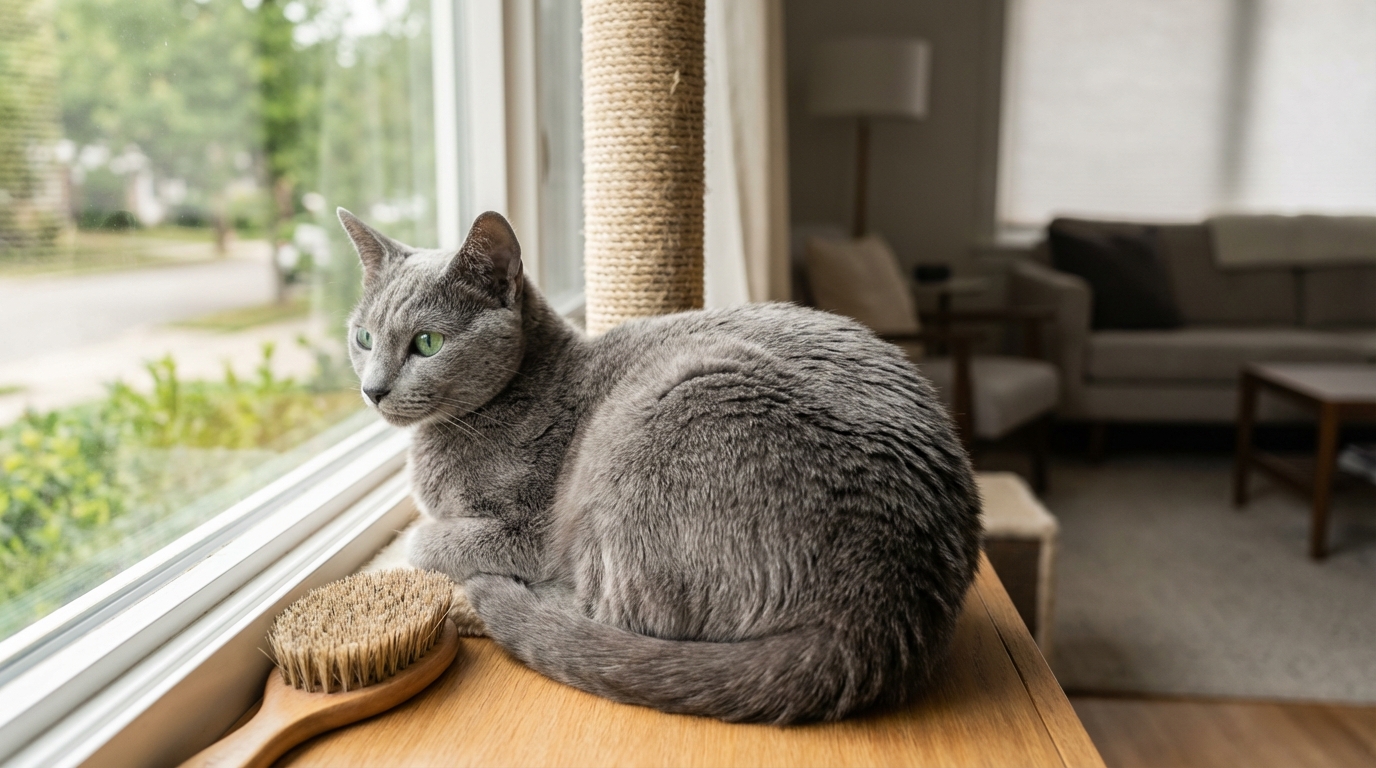
Essential supplies: what to have at home
Having the right basics set up before your cat arrives makes daily care simpler and reduces stress. Aim for comfort, hygiene, and healthy outlets for natural behaviours like scratching and hunting.
- Brush and grooming kit: a soft slicker or rubber grooming brush for weekly coat care; nail clippers and styptic powder for careful trims
- Scratching options: a sturdy vertical post plus a horizontal scratcher placed where your cat already likes to pause (near sleeping spots or common walkways)
- Dental care items: cat toothbrush and pet-safe toothpaste, plus dental-approved alternatives if brushing isn’t tolerated
- Enrichment toys: wand toy for interactive play, a few small “prey” toys to carry, and puzzle feeders for mental work
- Comfort and set-up: carrier, multiple resting spots, and at least one quiet retreat area
- Preventive care essentials: reliable parasite protection from our flea and tick prevention range and heartworm prevention options, plus a calendar reminder so you stay consistent
Daily care: grooming, feeding, and indoor enrichment
Good daily care is mostly about simple, repeatable habits: coat, claws, teeth, litter hygiene, and consistent parasite prevention. The short, plush coat generally needs only a weekly brush to remove loose hair and keep it glossy, but cats who enjoy grooming sessions may benefit from brief, more frequent touch-ups.
Feeding should support lean muscle and steady energy. Measuring meals (rather than free-feeding) can help if weight gain becomes a concern. Puzzle feeders slow fast eaters and add a satisfying “work for food” element. Fresh water matters too—some cats drink more readily from a wide bowl or a fountain.
Quick tip: If your cat seems picky, try a consistent play session before meals. A short hunt-style game can boost appetite and reduce boredom-related grazing.
Simple grooming routine checklist (adjust to your cat’s tolerance):
- Weekly: brush the coat; check ears for wax build-up; scan for tangles around the armpits and belly; quick eye check for discharge
- Every 1–2 weeks: trim nails; check paw pads; refresh scratcher placement if your cat is choosing furniture
- Several times per week (ideal): tooth brushing or dental-supported alternatives
- Monthly: weigh your cat (or assess body condition), feel along ribs and hips, and note any changes in appetite, thirst, or toileting
Because many Russian Blues enjoy calm, predictable games, keep play sessions short and frequent. For indoor enrichment, offer vertical space (cat tree or safe shelving), scratchers in favourite pathways, and interactive wand play. Rotate toys weekly to keep novelty high without adding clutter.
For year-round protection, plan ahead and shop your essentials in one go from our flea and tick prevention range and heartworm prevention options, so you’re not scrambling when you run low.
Introductions: new people, pets, and changes
Many Russian Blues do best when introductions are structured and unhurried. Whether you’re welcoming visitors, bringing home a new pet, or changing households, think in terms of safety, choice, and gradual exposure.
- New people: provide a quiet room or high perch; ask visitors to ignore the cat initially and let the cat approach first
- New pets: start with scent swapping (bedding or a soft cloth), then short, supervised visual contact; increase time together only if both animals stay relaxed
- Environmental changes: keep core routines stable (meals, litter location, sleep spots); add one new item at a time to avoid overwhelm
- Confidence boosters: use play and food puzzles to create positive associations around new experiences
If your cat hides more than usual during change, treat it as communication rather than “bad behaviour”. Giving them control over distance and timing is often the fastest path back to normal confidence.
Health: prevention routines and when to see a vet
Many Russian Blues are robust cats, but any breed can develop common feline issues such as dental disease, weight gain, stress-linked digestive upset, or skin irritation. The guidance below is general and isn’t a diagnosis; your vet can tailor advice to your cat’s age, lifestyle, and medical history. Make annual veterinary checks a baseline (more often for kittens, seniors, or cats with ongoing conditions), as early detection is one of the best health tools you have.
Prevention-focused care usually includes:
- Vaccinations: keep up to date on the schedule recommended by your vet for your cat’s risk level
- Parasite prevention: maintain consistent protection using appropriate products (for example from our flea and tick prevention and heartworm prevention options)
- Desexing: discuss timing and benefits with your vet
- Microchipping: ensure details are accurate and updated if you move or change contact information
- Routine dental exams: dental checks help catch gum disease early; combine with at-home tooth care where possible
- Weight and body condition checks: staying lean reduces strain on joints and supports long-term wellbeing
At home, watch for subtle changes: eating less, hiding more, reduced grooming, bad breath, changes in litter tray habits, or a coat that looks duller than usual. Cats are skilled at masking discomfort, so “small” changes can be meaningful.
See a vet urgently if you notice any of the following red flags: difficulty breathing, repeated vomiting, collapse or extreme weakness, inability to pass urine or straining in the litter tray, sudden hind-limb weakness, seizures, severe pain, pale gums, or a rapid decline in appetite and drinking.
Frequently Asked Questions
Do Russian Blues shed a lot?
They do shed, but many owners find it manageable. Their plush double coat can hold loose hair until brushing, so a weekly groom usually keeps shedding under control and helps reduce hair on furniture.
Are Russian Blues good for busy households?
They often prefer calm and predictability, but many cope well if they have routine, quiet spaces, and reliable daily interaction. If you’re out for long stretches, provide puzzle feeding and plan short, focused play sessions when you’re home.
How can I keep my Russian Blue entertained indoors?
Combine climbing options, scratchers, and short “hunt” play sessions with wand toys. Rotating toys and adding puzzle feeding supports indoor enrichment and can help prevent boredom-related behaviours.
Ready to stock up on prevention essentials? Browse our flea and tick prevention and heartworm prevention ranges, and book annual vet checks to keep your cat’s routine on track.