

The Russian Blue cat is known for its plush silvery coat, bright green eyes, and quietly devoted nature. If you’re considering one for your home, understanding their personality and day-to-day needs helps you choose confidently. This guide covers temperament, grooming, feeding, enrichment, and sensible health considerations—plus practical home setup tips that make life easier for both of you.
Breed overview: looks, size, and lifespan
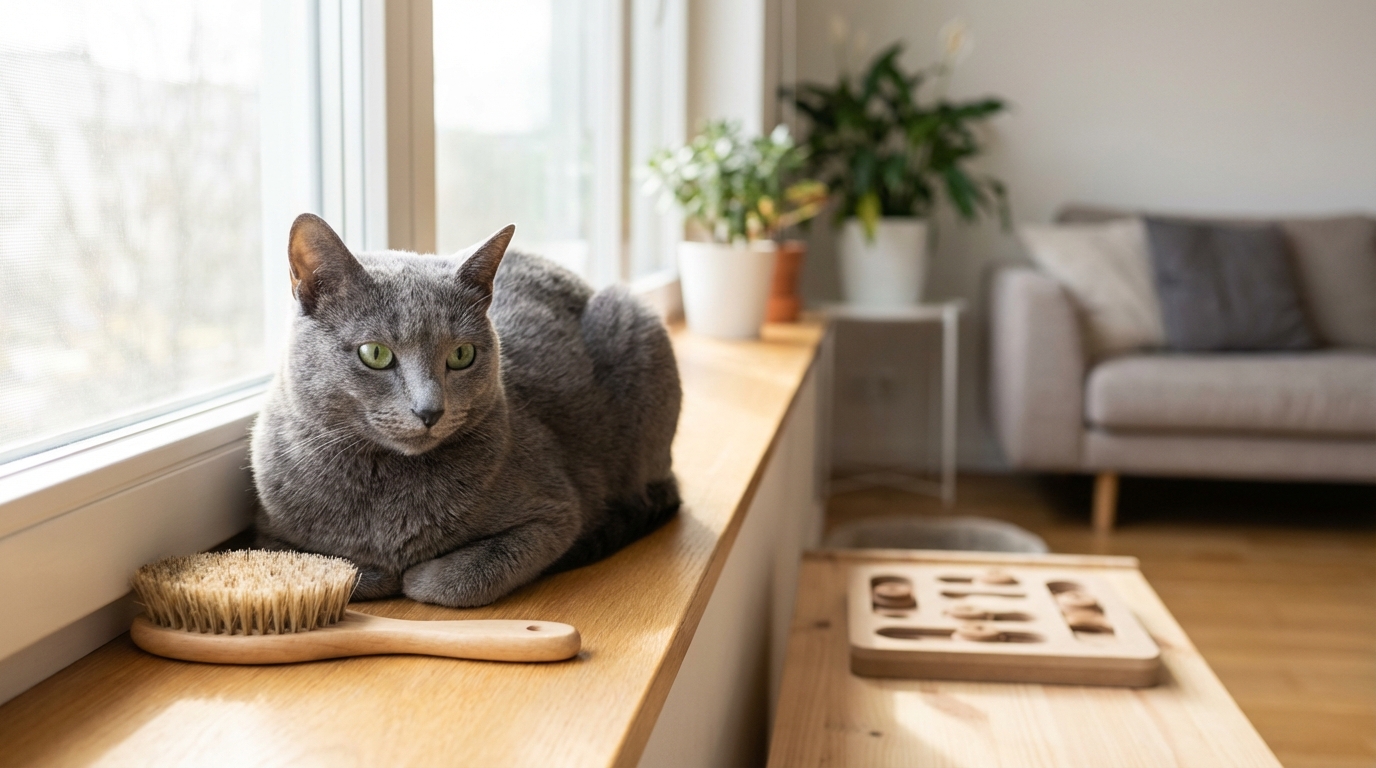
The Russian Blue is a medium-sized, fine-boned cat with a dense double coat that stands slightly away from the body, giving a velvety look. The coat is typically blue-grey with silver tipping, which can make the fur seem to shimmer in good light. Their head is wedge-shaped with large ears and vivid green eyes.
In most adult cats, a typical weight range is around 3–6 kg (with males often larger than females). They’re athletic rather than bulky, with long legs and a graceful gait—built for short bursts of speed and confident climbing.
With consistent care, a stable routine, and sensible preventative habits, many live 15–20 years. That long-term commitment is worth keeping in mind when you’re planning feeding routines, enrichment, and regular health checks over the years.
Temperament and what it’s like to live with one
Living with a Russian Blue is often a balance of affection and reserve. They tend to bond closely with their favourite people, following you from room to room and enjoying calm companionship without demanding constant attention. Many are gentle with respectful children and can do well with other pets when introductions are slow and positive.
This breed is usually sensitive to loud, chaotic environments and may prefer predictable routines. They’re intelligent and observant, so they often learn household patterns quickly—mealtimes, favourite nap spots, and which cupboard holds the treats. A settled Russian Blue is playful and curious, but typically not “in your face”.
Separation tolerance varies: some cope well with a regular workday, while others can become bored if left without enough stimulation. If you want a cat that enjoys closeness but also values personal space, a Russian Blue can be an excellent match.
Care essentials: grooming, feeding, and home setup
A practical care routine starts with simplicity. Their short, dense coat is relatively low-shedding but benefits from weekly brushing to remove loose hair and keep it glossy. During seasonal coat changes, increase brushing to a few times per week. Most enjoy gentle grooming if it’s introduced slowly and paired with rewards.
Feeding guide (everyday, practical)
Russian Blues can be very food-motivated, so portion control and routine matter as much as food quality. Aim for a complete, balanced diet and use your cat’s body condition (not just the bowl) to guide adjustments.
- Body condition check: You should be able to feel ribs with light pressure, with a visible waist when viewed from above and a gentle “tuck” behind the ribs from the side. If ribs are hard to feel or the waist disappears, reduce daily calories slightly and add play; if ribs are prominent and there’s little muscle, increase portions gradually and review food type.
- Portion adjustments: Keep changes small and steady. Re-check weight and body shape every 2–4 weeks, and adjust again if needed.
- Meals and enrichment: Split the day’s ration into 2–4 smaller meals, and use puzzle feeders or scatter feeding to slow fast eaters and add mental stimulation.
- Treat limits: Keep treats to no more than 10% of daily calories. If you train with treats, reduce the main meal portion to compensate.
- Hydration: Keep fresh water available and consider multiple water stations to encourage drinking. Some cats prefer wide bowls or flowing water fountains.
For home setup, prioritise vertical space and quiet retreats. Cat trees, shelves, and window perches let them observe safely, while a covered bed or low-traffic room gives them downtime when they need it. Provide at least one scratching option (vertical and horizontal) to protect furniture and support healthy claws.
Quick tip: If your Russian Blue seems shy with visitors, place treats near their safe spot and let them approach in their own time—avoid carrying them out for “introductions”.
Litter tray preferences and placement: Russian Blues are often tidy and may be particular about their toilet area. A useful rule is one tray per cat, plus one extra, placed in quiet, low-traffic locations with an easy escape route (not tucked into a dead-end corner). Scoop daily and keep litter depth consistent. If your cat starts toileting outside the tray, consider whether the tray location is too busy, the box is too small, the litter texture has changed, or the tray is not being cleaned often enough.
Carrier training (for calmer travel): Many cats only see the carrier right before a stressful event. Instead, leave it out as part of the furniture with a soft blanket inside. Feed occasional treats near it, then inside it, and practise short “door closed” moments at home. This approach can reduce hiding, make vet visits less dramatic, and help your cat feel more in control.
Basic grooming tools to have on hand: A soft slicker brush or rubber grooming mitt works well for their coat; a fine-tooth comb can help check for debris; and a quality nail clipper supports regular trims. Add a pet-safe toothbrush and toothpaste to your kit if you’re working on at-home dental care, and keep a gentle ear-cleaning product on hand only if your vet has shown you how to use it.
Enrichment & training: Daily play is essential for both fitness and confidence. Short, frequent sessions (5–10 minutes) with wand toys, soft balls, or “stalk and pounce” games suit their hunting instincts. Rotate toys weekly to keep novelty high without cluttering the floor, and finish play with a small meal or a few treats to mimic a natural hunt–eat–groom–rest cycle. Many Russian Blues also enjoy clicker training for simple behaviours (sit, touch, go to mat), which provides mental exercise and can make handling and carrier time easier.
Health and preventative care
Russian Blues are often described as generally robust, but any cat can develop common health concerns. The biggest day-to-day risk for many is weight gain, especially in food-loving cats living a more indoor lifestyle. Consistent meal boundaries, measured portions, and regular activity help protect joints and support overall wellbeing.
Dental care is also worth prioritising. Regular tooth brushing (even a few times weekly) and vet-recommended dental support can reduce tartar build-up and bad breath. Keep an eye on appetite, drooling, pawing at the mouth, or reluctance to chew—these changes warrant a check-up.
Urinary health: Cats can be prone to urinary discomfort, particularly if they drink little or are stressed. Contact your vet promptly if you notice frequent trips to the tray, straining, crying, blood-tinged urine, accidents outside the tray, or a sudden change in urine volume. Encourage good hydration and keep trays clean and easy to access.
Hairballs and digestive upsets: Regular brushing, steady meal routines, and appropriate fibre (as advised by your vet) can help some cats that vomit hairballs often. Seek veterinary advice if vomiting becomes frequent, your cat seems lethargic, stops eating, or you notice constipation or diarrhoea.
Stress-related issues: Russian Blues can be sensitive to change. Signs of stress may include hiding, reduced appetite, over-grooming, toileting changes, or irritability. Maintain predictable routines, provide safe hiding places, and introduce changes gradually. If signs persist or escalate, your vet can help rule out medical causes and advise on behaviour support.
Parasite prevention is a core part of long-term care even for indoor cats, as fleas and intestinal worms can still hitchhike in. Choose preventatives that suit your cat’s age, weight, and lifestyle, and keep protection consistent year-round.
Veterinary note: Parasite prevention needs vary between households and individual cats. Always follow your vet’s advice and the product instructions for your cat’s age and weight, and seek guidance if your cat is unwell, pregnant, or has a history of sensitivities.
- Fleas and ticks: Keep prevention up to date and check the coat after contact with other animals. Ongoing control helps prevent irritation, secondary skin issues, and household outbreaks.
- Heartworm: Ask your vet about risk and prevention options suitable for cats.
- Worms: Use a regular worming routine, particularly for multi-pet homes and cats that hunt or share outdoor access.
Is this breed right for you?
A Russian Blue often suits people who enjoy a calm, tidy companion with a loyal streak. They’re ideal if you value a quieter household, can provide daily interaction, and appreciate a cat that shows affection in subtle ways. They’re also a good fit if you like training and enrichment—many learn routines and simple cues readily.
This breed may be less suitable if you want a very outgoing cat that loves constant handling by everyone. They can be cautious with strangers and may hide when the home is busy. If you can offer patience, predictability, and a few cosy hiding places, you’ll likely see their confidence grow over time.
Before committing, consider whether you can provide consistent feeding boundaries (to help prevent gradual weight gain), daily play, and a home setup that supports their preference for calm. If you can, the payoff is usually a deeply bonded cat that thrives on gentle companionship.
Frequently Asked Questions
Do Russian Blues shed a lot?
They’re not heavy shedders compared with many breeds, but they do shed year-round in small amounts. Weekly brushing usually keeps fur under control and can help reduce hairballs.
Are Russian Blues good for first-time cat owners?
They can be, especially if you like a calm companion and can stick to routines. Focus on enrichment, gentle socialisation, and consistent feeding habits to support long-term wellbeing.
How much grooming does a Russian Blue need?
Their coat is relatively low-maintenance, with weekly brushing and occasional nail trims. Dental care, hydration, and parasite prevention are just as important as coat grooming for overall health.
Ready to support your cat’s wellbeing long-term? Build a simple routine that covers flea and tick control, regular worming, and heartworm prevention as advised by your vet, so your Russian Blue can stay comfortable, active, and protected year-round.