

Following a clear puppy vaccination schedule helps protect your new mate through their most vulnerable months. If you’re researching puppy shots in Australia and wondering when to vaccinate a puppy, here’s what typically happens at each visit and how to plan ahead.
We’ll also cover practical prep tips and the essentials to have ready at home between appointments.
Typical puppy vaccination timeline in Australia
Most vets in Australia start vaccines when puppies are still young because maternal antibodies (passed from mum) fade at different rates. That’s why puppy vaccines are given as a series, not a once-off.
- 6–8 weeks: First vaccination is commonly given around this age. Many breeders organise this before pups go to new homes, but not always.
- 10–12 weeks: Second vaccination (a key booster to build stronger immunity).
- 14–16 weeks: Final puppy course vaccination for many pups, especially important in higher-risk areas and multi-dog environments.
- 6–12 months: A follow-up booster is often recommended to lock in protection into adulthood.
- Ongoing: Adult boosters vary (often every 1–3 years depending on vaccine type, lifestyle, and local risk).
Because schedules can vary by state, lifestyle, and local outbreaks, treat the above as a practical guide rather than a strict rulebook. If you’re trying to figure out when to vaccinate a puppy you’ve just brought home, your first step is confirming what’s already been done (dates matter more than “about 8 weeks”).
What puppy vaccines usually protect against
In Australia, core puppy vaccinations commonly focus on serious, highly contagious diseases that spread in parks, footpaths, boarding facilities, grooming salons, and even on shoes and clothing. This is why your puppy vaccination schedule is about more than just social outings—it’s basic protection for everyday life.
Core vaccines often cover:
- Parvovirus: A tough virus that can survive in the environment and is especially risky for young puppies.
- Distemper: A severe viral disease that can affect the respiratory, digestive, and nervous systems.
- Hepatitis (adenovirus): Can impact the liver and other organs.
Common additional vaccines may be recommended based on risk:
- Kennel cough: Often suggested for pups heading to daycare, boarding, training classes, dog shows, or busy dog parks.
Ask what your puppy’s lifestyle will look like in the next 3–6 months (dog beaches, group training, boarding over Christmas, etc.). That context helps your vet tailor the best plan for puppy shots in Australia without over- or under-doing it.
What to expect at the appointment (and after)
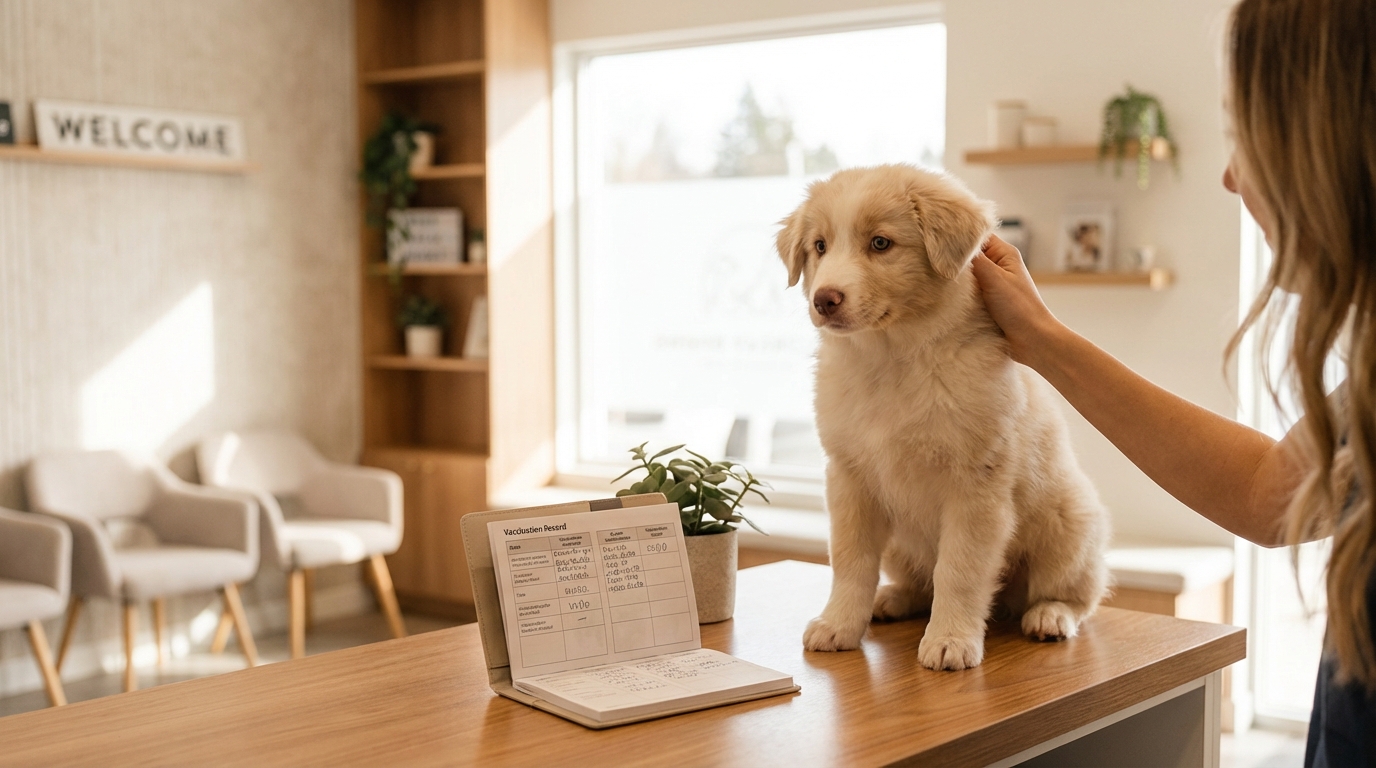
A vaccination visit is usually quick, but it’s more than “just a needle”. The vet (or nurse) will typically do a basic health check—eyes, ears, heart, lungs, mouth, belly, skin, and weight—then confirm the vaccine timing based on age and previous doses.
After the vaccine, many puppies are completely fine. Mild, short-lived effects can happen, such as being sleepier than usual, a small lump at the injection site, or a bit of tenderness.
Quick tip: Keep the rest of the day calm after vaccinations—skip big play sessions, long walks, and grooming. Offer water, keep meals normal, and plan a quiet evening at home.
Bring any paperwork you have (breeder records, vet cards, microchip details). If you don’t have records, don’t guess—your clinic can advise the safest way to proceed so your puppy vaccination schedule stays on track.
Between visits, focus on controlled socialisation: invite healthy, vaccinated dogs you trust to your home, and avoid high-traffic dog areas until your course is complete. This lets your puppy build confidence without unnecessary disease exposure.
Timing questions, missed doses, and common mistakes
The most common issue with puppy vaccines is timing drift—life gets busy, and the “next week” appointment becomes “next month”. Because each dose builds on the last, leaving too big a gap can reduce protection and may mean repeating part of the series.
Common scenarios:
- You adopted a puppy with unknown history: Clinics often treat this as a fresh start and plan doses based on estimated age and risk.
- You missed the 10–12 week booster: Rebook as soon as possible and follow the clinic’s guidance on whether an extra booster is needed.
- You’re planning boarding or daycare: Facilities may require proof of vaccination with specific timing rules, so book ahead—especially before school holiday peaks.
Also remember that vaccines are only one part of the protection puzzle. Puppies explore with their mouths, sniff everything, and pick up parasites easily, so you’ll want a consistent plan for flea, tick, and heartworm prevention alongside vaccinations. If you’re stocking up for the first few months, browse our puppy supplies to cover the essentials in one go.
Costs, reminders, and supplies to have ready
Costs for puppy vaccinations can vary by clinic, location, and whether the visit includes additional services (health check, intestinal worming advice, kennel cough add-on, or microchip checks). The best approach is to ask for a written estimate for the full puppy series so you can budget across the first 3–4 months.
To make the process smoother, set up a simple reminder system:
- Put all vaccine due dates into your phone calendar at the time of booking.
- Keep your puppy’s vaccine record in a dedicated folder (or take a clear photo as backup).
- Book the next appointment before you leave the clinic.
At home, a few basics help you stay organised and keep your puppy comfortable between visits:
- A properly fitted collar or harness for calm clinic trips.
- High-value treats to build positive associations with handling.
- Parasite prevention products suited to your puppy’s age and weight range.
- Enzymatic cleaner for inevitable toilet-training accidents.
If you’re preparing for your first vet run, our puppy supplies collection makes it easy to grab practical basics alongside vet-grade parasite protection.
Frequently Asked Questions
Can my puppy go to the dog park before finishing vaccinations?
It’s usually safest to avoid high-traffic dog areas until your puppy’s initial vaccine course is complete, because viruses can linger in the environment. Instead, do low-risk socialisation at home with healthy, vaccinated dogs and controlled outings in clean areas.
What if my puppy seems tired after their vaccine?
Mild sleepiness or being a bit quiet for a day can be normal after vaccination. Keep things calm, make sure they’re drinking, and monitor them—if you’re worried or symptoms seem severe, contact your clinic for advice.
Do indoor puppies still need vaccinations and parasite prevention?
Yes—many infectious diseases and parasites can be brought inside on shoes, clothing, or visitors, and most “indoor” puppies still go outside for toileting and walks. A sensible vaccine plan plus flea, tick, and heartworm protection helps cover everyday exposure risks.
Ready to get organised for your puppy’s first months? Shop our essentials and vet-grade prevention in puppy supplies, and chat to your vet if you need help tailoring timing to your puppy’s lifestyle.