

This new kitten guide walks you through the kitten first week so you can settle your new arrival with less stress (for both of you). From setting up a safe room to choosing kitten essentials, here’s a simple plan you can follow day by day.
You don’t need to do everything perfectly—just cover the basics, keep routines calm, and watch your kitten’s cues.
Set up before your kitten arrives
Your goal is to make the first space predictable and low-stimulation. Choose a quiet room with a door (spare bedroom or study) and remove hazards like loose cords, dangling blind strings, small swallowable items, and unstable shelves.
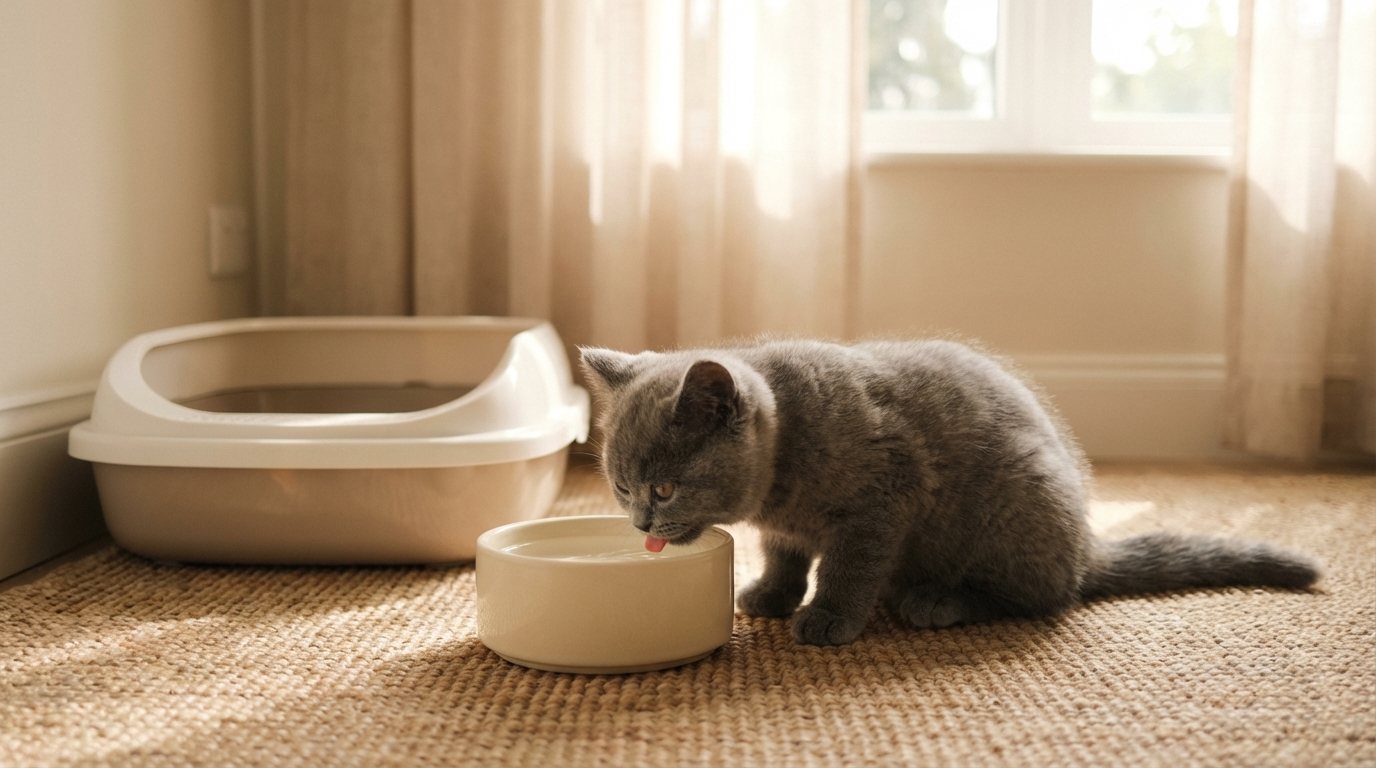
Place food and water on one side of the room and the litter tray on the other. Add a hiding spot (a covered bed or open carrier) plus a soft blanket that smells like home if you have one.
- Temperature & comfort: Provide a warm bed away from drafts and a safe heat source if needed (no direct contact heat).
- Safe exploration: Block off under-bed gaps if you can’t reach your kitten easily.
- Calm arrival: Keep visitors minimal for the first few days.
Day 1: Safe room, slow introductions, and routine
Bring your kitten straight into the prepared room and open the carrier door. Let them come out on their own—avoid pulling them out, which can turn the first experience into a scare.
Offer a small meal and show them the litter tray. Then give them time to decompress: sit on the floor, speak softly, and let them approach you.
- Children: Teach “one finger pet” strokes on the cheek and no chasing.
- Other pets: Start with scent swapping (blankets) and short, supervised door-only meetings before face-to-face time.
- Night-time: Expect some calling or play bursts—keep the room safe and quietly consistent.
If you’re planning to shop in one go, browsing the Puppy & Kitten range can help you bundle the basics without overbuying.
Kitten essentials checklist (what you actually need)
It’s easy to get carried away in the kitten first week, but a short list covers nearly everything. Think: eat, toilet, sleep, play, and safe travel. This section doubles as a practical kitten essentials checklist you can tick off.
- Food: A quality kitten diet and a few small dishes. Keep meals consistent for the first week to avoid tummy upset.
- Water: A heavy bowl that won’t tip. Some kittens drink more from a fountain, but it’s optional.
- Litter set-up: A low-sided tray (easy entry), kitten-safe litter, and a scoop. Keep the tray very clean—kittens can refuse a dirty box.
- Bed & hide: A washable bed plus a covered hideaway (even a carrier with a blanket works).
- Scratching: One vertical scratcher and one horizontal option. Place one near where your kitten wakes up.
- Toys: A wand toy for supervised play, a couple of small toss toys, and a puzzle feeder for mental stimulation.
- Carrier: A sturdy carrier for safe travel and vet visits. Leave it out at home so it becomes familiar.
- Grooming: A soft brush and kitten nail clippers (or a file) for gentle handling practice.
Quick tip: If your kitten hides, sit nearby and toss a treat past them (not at them). Curiosity usually wins, and you avoid “looming” over them.
Need help narrowing it down? Start with the essentials above, then add extras once you’ve learned your kitten’s preferences. You’ll often find it simpler to shop by life stage in the Puppy & Kitten section.
Health, handling, and parasite protection basics
The first week is about observation and gentle routine-building. Check your kitten is eating, drinking, toileting, and playing daily, and note any sudden changes in energy or appetite.
Start calm handling sessions early: touch paws, look in ears, and gently lift lips for a second, followed by a reward. These tiny sessions help future grooming and health checks feel normal.
- Weigh-ins: Using kitchen scales (if safe and calm) can help you spot issues early; consistency matters more than perfection.
- Flea & tick awareness: Look for scratching, flea dirt (black specks), or irritated skin, especially around the neck and tail base.
- Heartworm prevention: Build a reminder system from the start so protection doesn’t slip when life gets busy.
When you’re ready to stock up, choose veterinary-grade prevention suited to kittens and follow the label directions carefully. Shopping from a dedicated Flea & Tick category can make it easier to compare formats and pick what fits your routine.
Common first-week problems (and what to do)
Most “issues” in a new kitten guide come down to stress, overstimulation, or an environment that’s too big too soon. Keep the safe room routine steady for several days, then expand access gradually as confidence grows.
- Hiding all day: Normal at first. Sit quietly, offer food on a schedule, and use play to build confidence.
- Not using the litter tray: Place your kitten in the tray after meals and naps, keep it spotless, and avoid strong-scented cleaners. If accidents continue, try a second tray or a different litter texture.
- Biting hands during play: Redirect to a toy immediately and pause play for a moment. Avoid rough hand play—teach that toys are for teeth.
- Excessive meowing at night: Add a warm bed, a safe hide, and a bedtime play session. Keep your response calm and consistent.
- Scratching furniture: Move a scratcher to the exact spot, reward use, and make the “wrong” surface less appealing with a temporary cover.
If you’re seeing persistent scratching or you spot flea dirt, consider kitten-appropriate options from the Flea & Tick range and keep bedding washed while you address the cause.
Frequently Asked Questions
How long should I keep my kitten in one room?
Usually a few days to a week, depending on confidence. If your kitten is eating well, using the litter tray reliably, and seeking interaction, you can expand their space gradually and supervise exploration.
What should I feed in the first week?
Keep food consistent at first—sudden changes can cause tummy upset. If you need to switch diets, do it slowly over several days while monitoring appetite and stools.
When can I start flea, tick, and heartworm prevention?
Start timing depends on your kitten’s age and weight and the specific product directions. Choose a veterinary-grade option labelled for kittens and follow the instructions exactly.
Ready to get set up quickly? Shop the Puppy & Kitten basics and add protection from Flea & Tick so your first week runs smoother—then chat to your vet if you’re unsure what’s best for your kitten.