

Dog dementia can creep in so gradually that it’s easy to mistake early changes for “just getting older”. If you’ve noticed new restlessness, altered sleep, or lapses in routine, you may be seeing the first signs of cognitive changes. The good news: with the right home setup and daily habits, many dogs cope better and feel more secure.
Early signs to watch for
Age-related cognitive decline in dogs often shows up as subtle behaviour changes before anything dramatic happens. Keeping notes (what you saw, when it happened, and what was different that day) makes patterns easier to spot and explain.
- Disorientation: staring at walls, getting “stuck” behind furniture, hesitating at doorways, or seeming lost in familiar rooms.
- Changed social interaction: less interest in greeting, clinginess, or withdrawing from the family.
- Sleep-wake changes: pacing at night, vocalising, or sleeping more in the day.
- House training slip-ups: accidents indoors despite previously reliable habits.
- New anxiety: unsettled during quiet times, more reactive to everyday sounds, or difficulty settling.
Many owners describe these moments as senior dog confusion: your dog looks at you as if asking what to do next, even with routines they’ve followed for years. Because different health issues can mimic these signs, it’s worth taking a measured, step-by-step approach rather than assuming the cause.
What to rule out first
Before labelling changes as dog dementia, rule out common medical problems that can look similar. Pain, hearing or vision loss, urinary issues, dental disease, thyroid changes, and mobility limitations can all cause restlessness, irritability, or accidents.
Start with a simple home checklist:
- Vision and hearing: does your dog startle more, ignore cues, or bump into things?
- Mobility: are they hesitant on stairs, slipping on floors, or struggling to stand up?
- Toileting changes: increased frequency, straining, or thirst can point to non-cognitive causes.
- Behaviour context: does pacing happen after meals, after visitors, or only at night?
Even when cognitive decline is the likely explanation, managing comfort, pain, and daily stressors can make a noticeable difference in behaviour and confidence.
Home changes that reduce stress
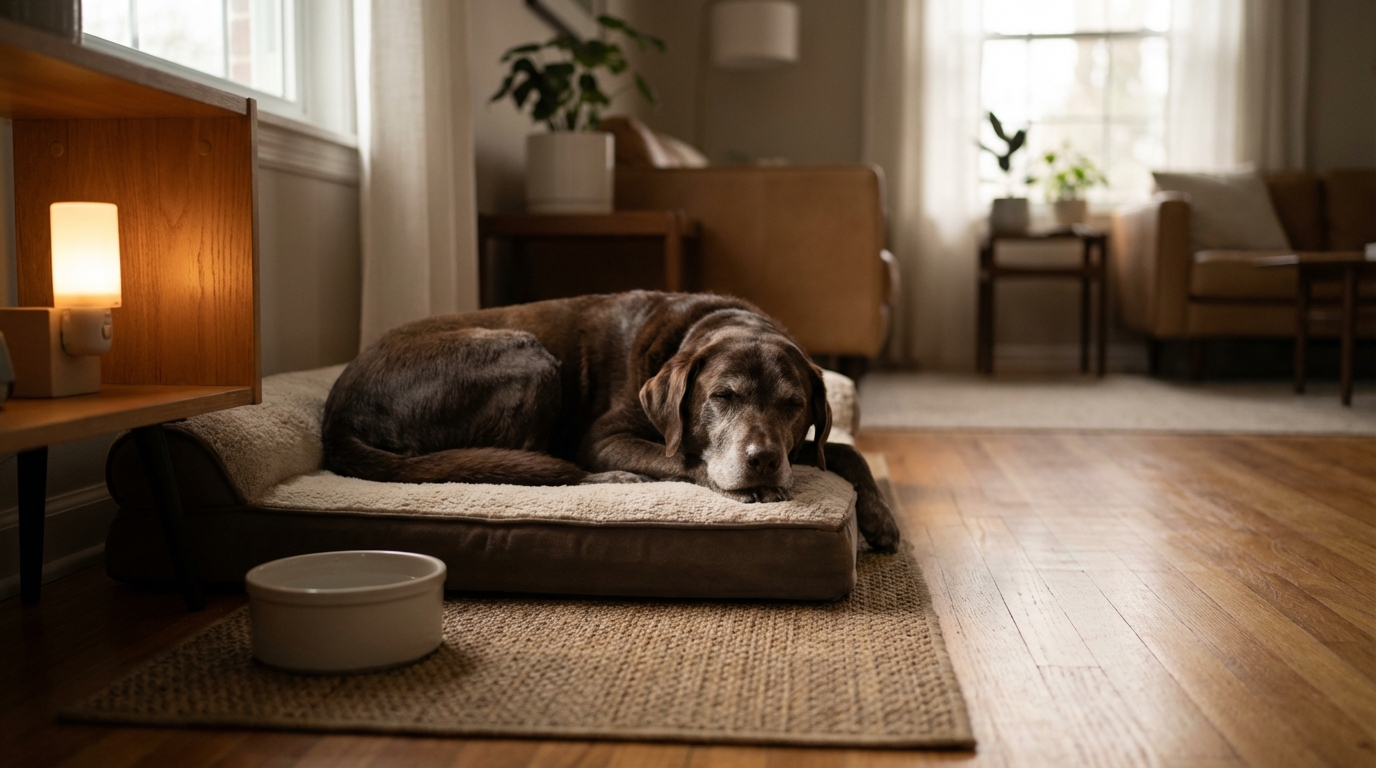
Dogs with cognitive decline often do best with a predictable environment. The aim is to make the “right choice” easy: clear routes, familiar cues, and fewer surprises.
- Keep layouts consistent: avoid moving furniture, beds, and water bowls unless you have to.
- Create safe zones: one quiet bed area and one daytime hang-out spot, both with easy access.
- Improve traction: add runners or non-slip mats on slippery floors to reduce slips and hesitation.
- Use gentle guidance: baby gates can prevent wandering into confusing areas (like tight hallways or laundry rooms).
- Support night-time settling: a dim night light and a consistent bedtime routine can reduce night pacing.
Quick tip: If your dog seems “stuck” or panicked, avoid repeated commands. Instead, calmly lure them with a treat in a wide arc to reset their orientation without pressure.
For dogs showing senior dog confusion, visual markers can help. Try placing a contrasting mat by the back door, feeding station, or favourite bed so key locations stand out.
Daily routine, enrichment, and nutrition basics
Routine is reassuring, but it should still include gentle mental and physical activity. Think “small and frequent” rather than long sessions that can overwhelm or tire them out.
- Short sniff walks: slow, sensory walks are often more calming than brisk exercise.
- Simple brain games: scatter feeding in grass, treat towel rolls, or easy puzzle toys (avoid overly hard puzzles that frustrate).
- Low-stress training refreshers: quick, upbeat practice of sit, touch, and name response helps confidence.
- Predictable feeding times: consistency supports digestion and reduces agitation around meals.
Nutrition can support healthy ageing, but changes should be gradual. If you’re considering a new senior diet or adding supplements, focus on steady appetite, good stool quality, and stable energy rather than chasing quick “miracle” fixes.
Also consider comfort as part of routine: a supportive bed, easy access to water, and regular grooming can reduce stress that worsens cognitive decline in dogs.
Safety, hygiene, and parasite prevention for seniors
Older dogs are often less tolerant of discomfort, itch, and disrupted sleep. Parasites can intensify restlessness and scratch-related waking, which may aggravate night-time pacing and anxiety.
Keep hygiene and prevention simple and consistent:
- Check skin and coat weekly: look for redness, scurf, or signs of itching.
- Stay on schedule: consistent flea, tick, and heartworm prevention helps avoid avoidable setbacks.
- Choose easy-to-use formats: if your dog dislikes handling, consider options that minimise fuss and repeated restraint.
- Protect sore joints: keep nails trimmed to improve grip and reduce slipping.
If you’re reviewing your routine, explore Atlantic Pet Products’ flea and tick prevention options and the heartworm prevention range to keep senior care straightforward and reliable.
Frequently Asked Questions
How do I know if it’s dog dementia or just normal ageing?
Normal ageing is usually gradual and doesn’t significantly disrupt daily functioning. When you see repeated disorientation, changed sleep patterns, accidents, or new anxiety, it may point to a cognitive issue rather than “just old age”. Tracking changes over a few weeks is often the clearest way to tell.
What helps with senior dog confusion at night?
Keep evenings calm and predictable: a short toilet break, a familiar bed location, and a dim light can reduce disorientation. Avoid rearranging rooms and try not to “test” your dog with new cues late in the day when they’re tired.
Can cognitive decline in dogs be slowed?
Many dogs do better with supportive routines, enrichment, and a low-stress environment, even if the underlying ageing process continues. The goal is improved comfort and confidence day-to-day, not a quick fix.
For a smoother senior care plan, keep prevention and comfort essentials consistent—browse our flea and tick prevention and heartworm prevention supplies, and chat to your vet if symptoms change suddenly or worsen.